the association
Our mission
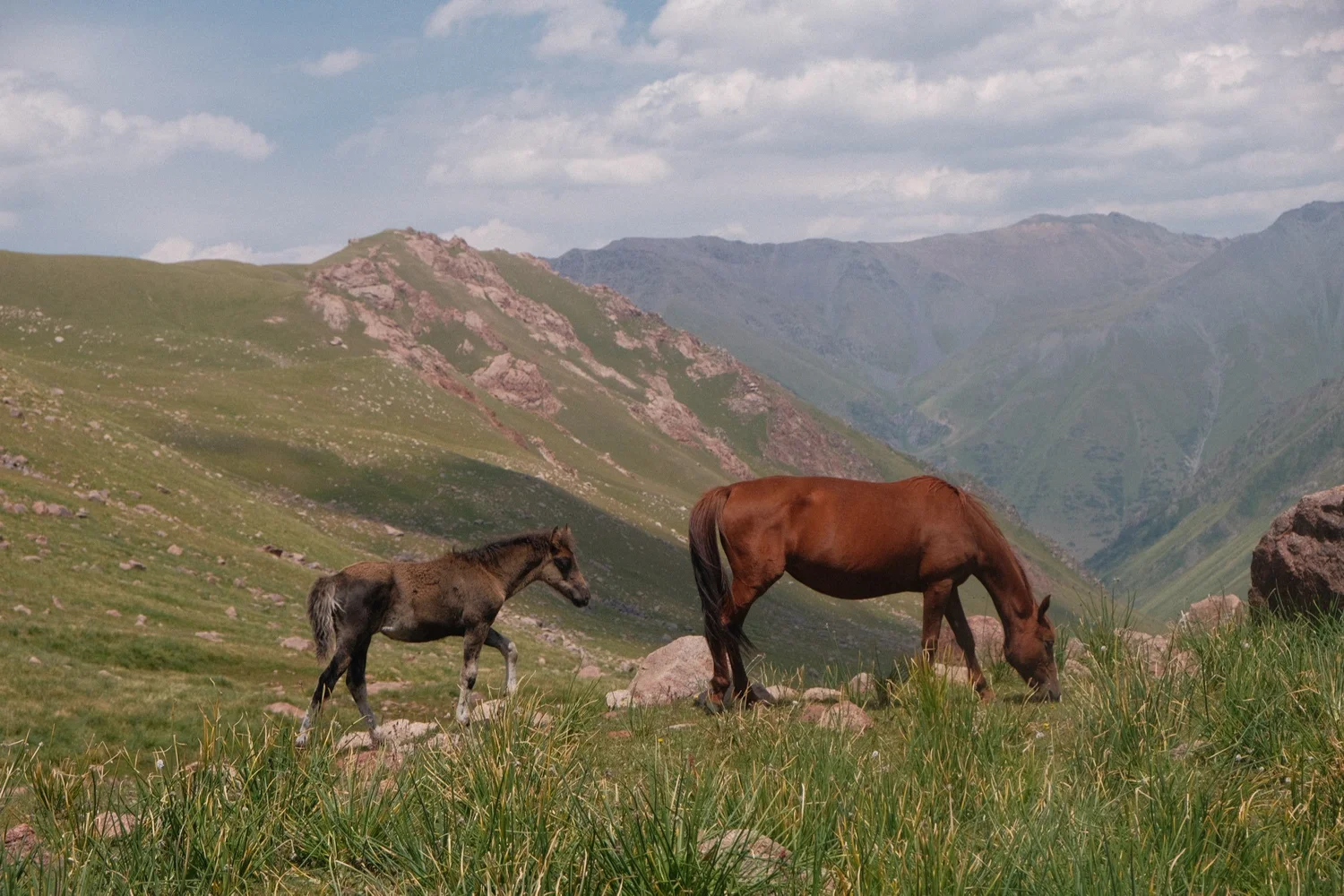
The Chaar is an ancient spotted horse of Kyrgyzstan that a century of crossbreeding nearly erased. Our mission is to bring it back, in its own mountains, with the herding culture that goes with it.
A question about the Appaloosa, in 2012, set Munarbek Kuldanbaev on a path that shaped the rest of his life. He's been leading the herd's revival on the ground ever since, and our job is to help him keep it growing.
where it started
The question is still open
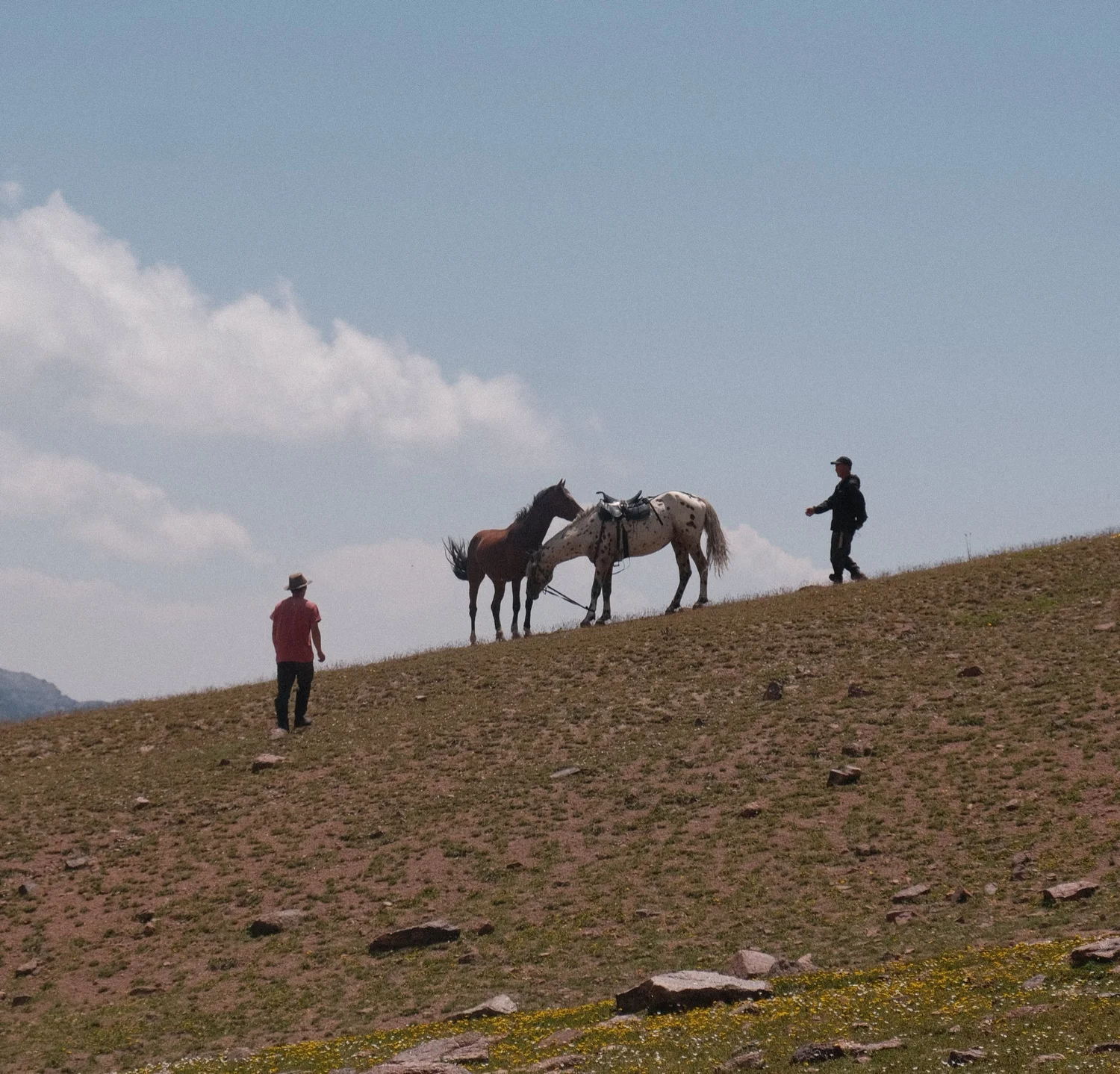
In 2012 Munarbek set out with Scott Engstrom and Conor Woodman to look into it properly. Along the way they found Chaar Suluu, and that November hair samples were taken from 30 horses for genetic study at Texas A&M University. We know the Chaar shares the leopard spotting gene (Lp) with the Appaloosa. Whether it is the Appaloosa's ancestor is still an open question, and testing it is the study we would most like to fund.
Finding Chaar Suluu changed the course of Munarbek's life. He took on the revival of the Chaar horse in earnest, and a research question became his life's work. The film True Appaloosa tells the story, and Munarbek explains how he got involved.
who does the work
Two organisations, one herd
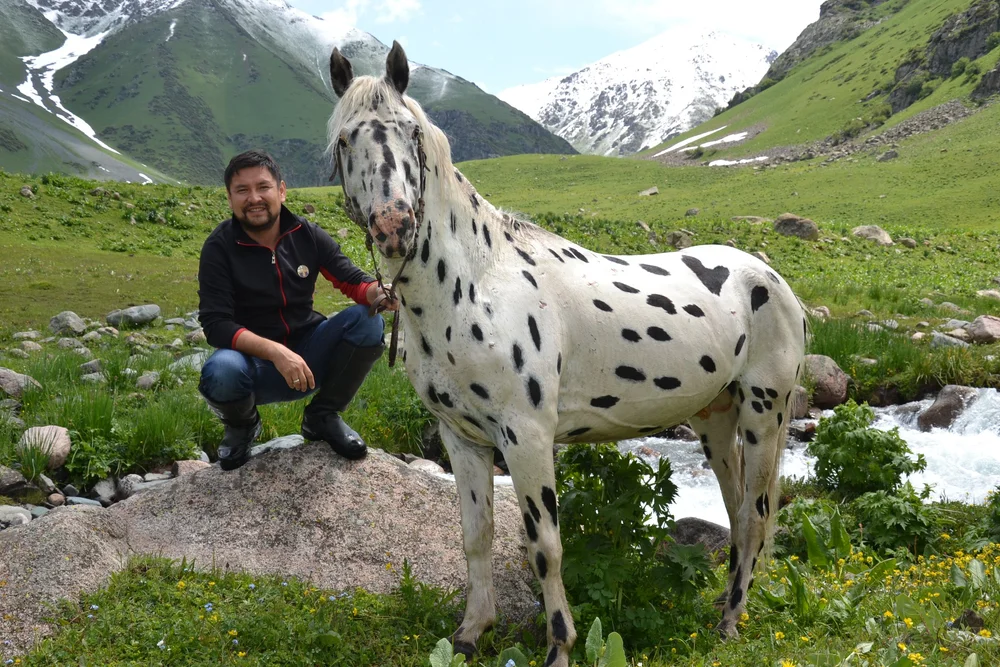
Munarbek does this work day to day, in Kyrgyzstan. Real herds, open country, and years of patient breeding to rebuild a line that nearly disappeared.
Yrys works alongside him. He grew up in these mountains, knows the ground better than almost anyone, and watches over the herd in every season.
in kyrgyzstan
Our partner, the Chaar Appaloosa Foundation
Led by Munarbek. Runs the ranch near Toktogul, the breeding and the day-to-day care of the horses.
in france, since 2023
The Association
Led by President Nicolas Poirier. Finds the partners, supporters and visibility the Foundation needs to keep going.
why it matters
Why save one breed of horse?
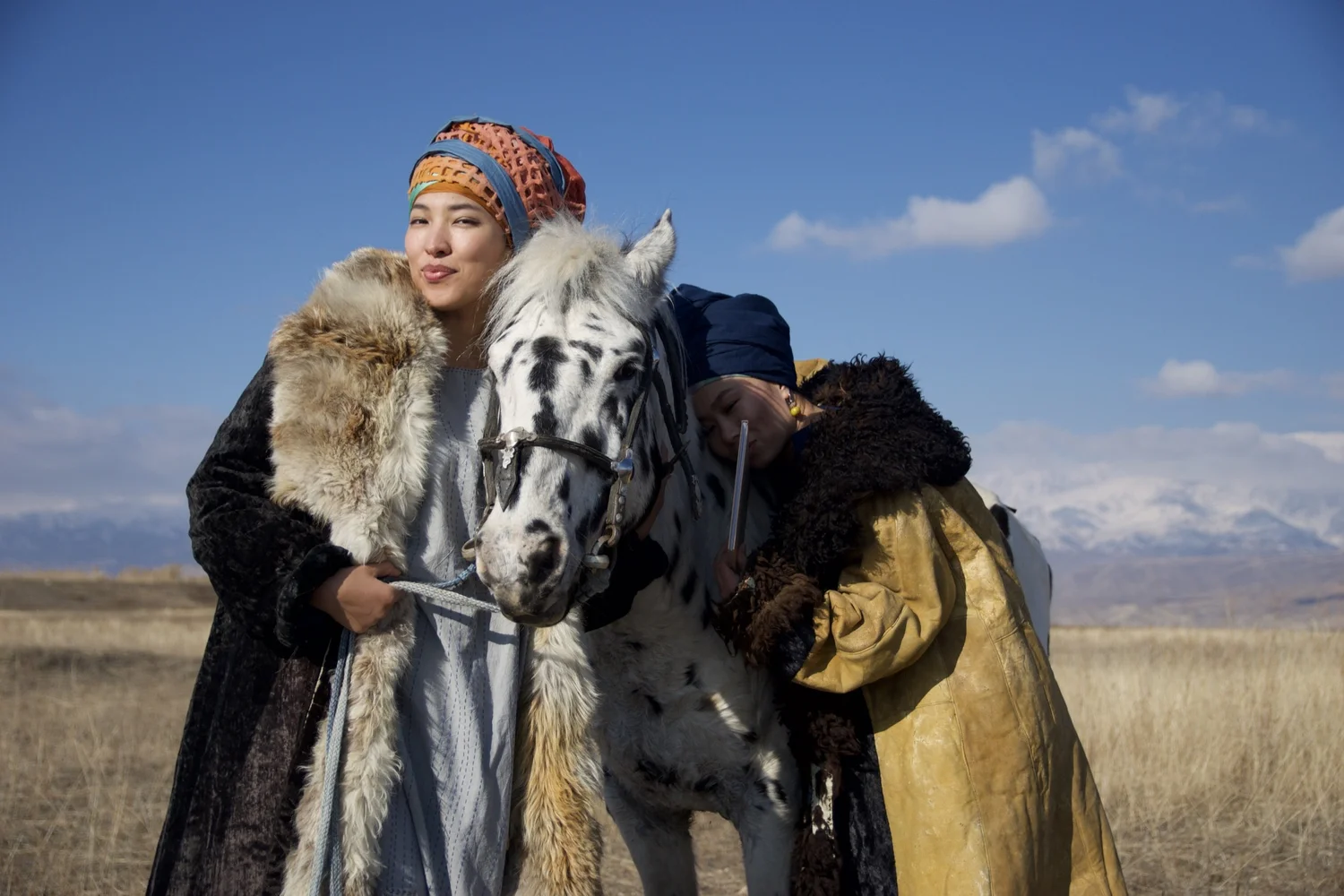
Because the Chaar has spent centuries adapting to Kyrgyzstan's mountains, and that can't be rebuilt once it's gone. The Texas A&M report found rare gene variants in these horses, nearly a third of them the kind that vanish first when a population narrows; lose them and no amount of later breeding brings them back. The DNA results show just how old its bloodline is.
It matters because of the people too. The herd is worked the way Kyrgyz herders have always worked horses, on the same high pastures, with the same knowledge passed down, and fewer people each year take up that life. Keeping the horse means keeping the practice that goes with it.
It matters to people here too. Working horses still carry riders, move herds and bring visitors to rural Kyrgyzstan, so protecting the breed protects those livelihoods. And the Chaar is part of the country's story, from the legend of Tolubai Synchy to the oldest epic of all.
In the Manas epic, Kyrgyzstan's great national poem, the twelve-year-old Manas rides into battle on his horse Toruchaar.
The breeding programme is one part of a wider approach to protecting biodiversity in the region, alongside the land and the culture the horses belong to.
where we stand today
What's been done so far
Land secured, and the ranch's first phase built
With help from the sale of Alice Shirley's artwork, we bought land near Toktogul and finished the first phase of Chaar Ranch: the core facilities to handle the horses safely, and living quarters for the team on site.
A herd of 80+ horses
Four breeding herds with 51 mares and 4 stallions, more foals every season, and 13 young stallions and riding horses alongside them. Meet the horses.
The first sponsored foals
Last year the Accelerated Breeding Programme delivered its first foals to its first members. One of them is getting ready to become the first Chaar foal ever to travel abroad, to the United States.
Two expeditions, and counting
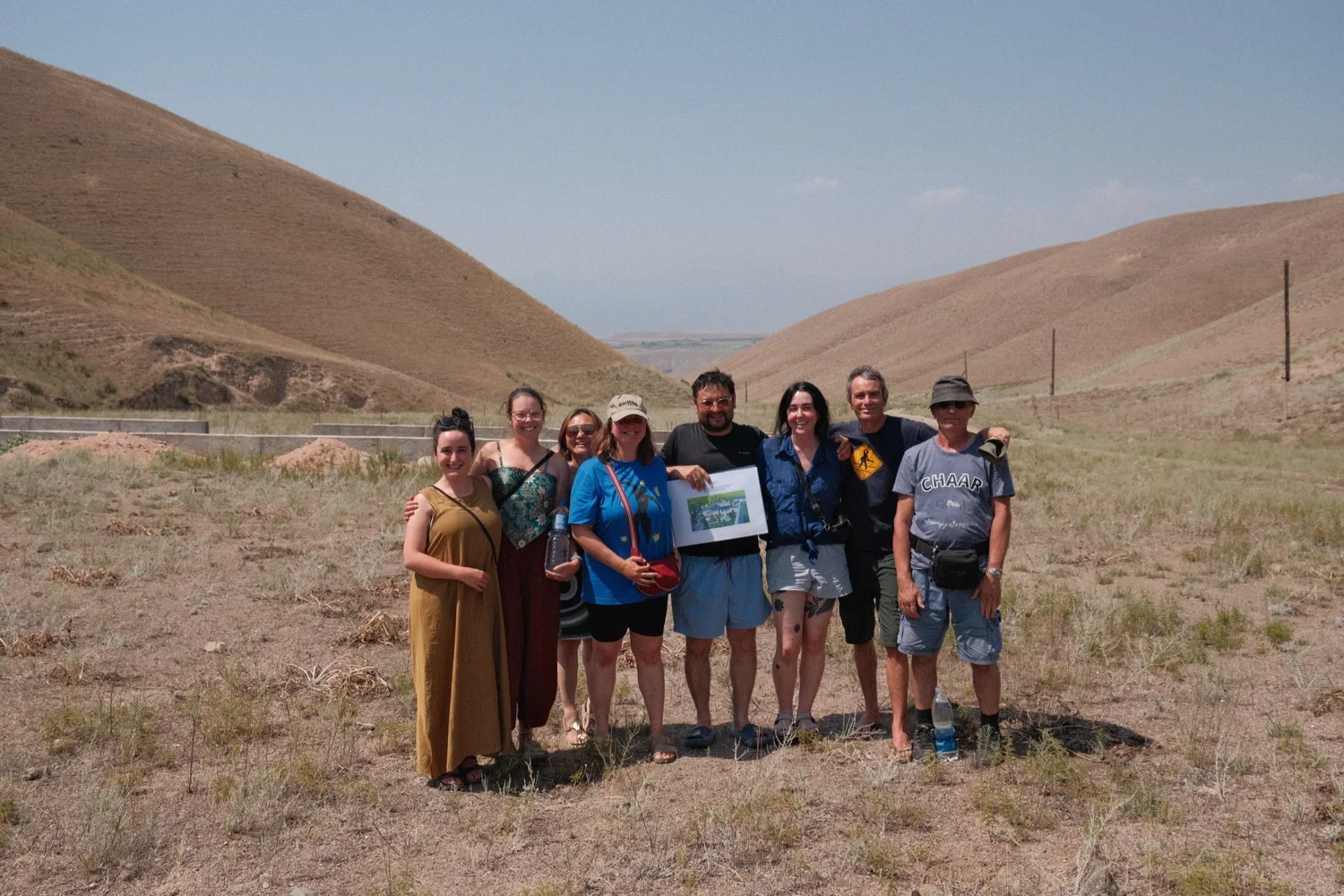
In 2025 we led our first expedition, bringing members and new supporters to see the herd on its summer pastures. We did it again in 2026, and it's quickly become one of the main ways we raise support each year. The 2027 expedition is open now.
A website and shop that bring in support
This website and our online shop let people anywhere in the world donate, buy something that helps the herd, and follow the breed's story as it happens.
Supporters in ten countries
People in France, the UK, Germany, Switzerland, Luxembourg, the USA, Canada, Italy, Spain and Portugal take an active part in the breeding programme. Everything above was built on that network.
the work ahead
Where we're going
horses. That's the documented, pedigreed population we're working towards for breed recognition. The next goal is 130 horses by 2029.
Getting there means checking the Leopard complex genetics behind every foal and building a registry that lasts. It means growing the ranch and improving breeding and veterinary care so the herd can grow at a pace the land and the team can sustain.
And it means more support. There's no government funding for this in Kyrgyzstan, so the work depends on partners and donors abroad. You can follow how far we've come in our story, year by year.
community
Photos from our visitors
Every expedition and ranch visit adds a few more. These were taken by people who came to see the herd for themselves, on an expedition or as a volunteer. Tap one to read their story.
.jpeg?format=750w) Léon Mitouard: two weeks on a Kyrgyz farm
Léon Mitouard: two weeks on a Kyrgyz farm
 A Parisian's journey to the heart of Kyrgyzstan
 Nicolas, Jessie, Esther and Zelie meet the herd
 Sarah Gottshall: a spring in Toktogul
 Winter adventures in Kyrgyzstan
 Federica Nardella: riding in the Suusamyr mountains
 Josette Obin: becoming part of the Chaar story
 Yorke McGillivray: the first Chaar foal bound for the USA
join in
Help the herd grow
Monthly supporters are what carry the herd through each year. Every gift pays for the herd's feed, care and keepers (you can also give once), French taxpayers can claim 66% of a gift back as an income-tax reduction, and every supporter gets a small thank-you gift each year, wherever they live.
Secure payments · cancel any time