the horse
The Kyrgyz Chaar horse
An ancient spotted mountain horse of Kyrgyzstan. For centuries it lived alongside nomadic families, shaped more by weather and altitude than by people. Then a century of crossbreeding, first for the Russian cavalry and then on Soviet collective farms, diluted the line until only a handful were left. It shares the leopard spotting gene with the Appaloosa; whether it is the Appaloosa's ancestor is still an open question.
Today there is a real effort to bring the breed back, led by horseman Munarbek Kuldanbaev and the International Chaar Appaloosa Horse Association, from Chaar Ranch in the Tian Shan mountains.
where it started
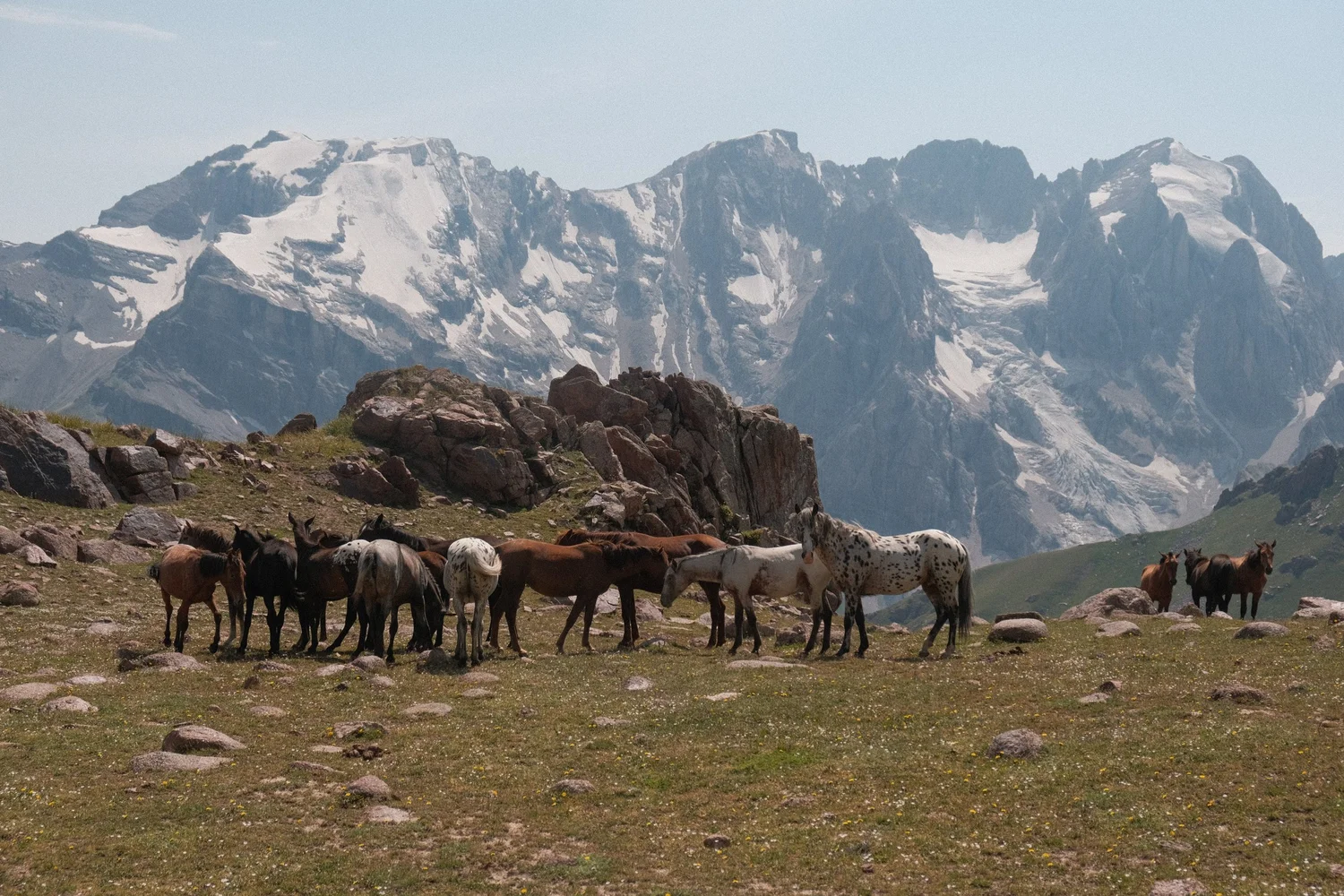
It began with one stallion
Munarbek found Chaar Suluu first. Every horse in the breeding programme today goes back to him and the three stallions who followed. Tan Suluu and Ak Suluu are not his sons, and their mares are all his daughters. Chaarlie, his son, runs with mares from that other line. That way there is no inbreeding, and every foal still carries Chaar Suluu’s blood.
foundation sire
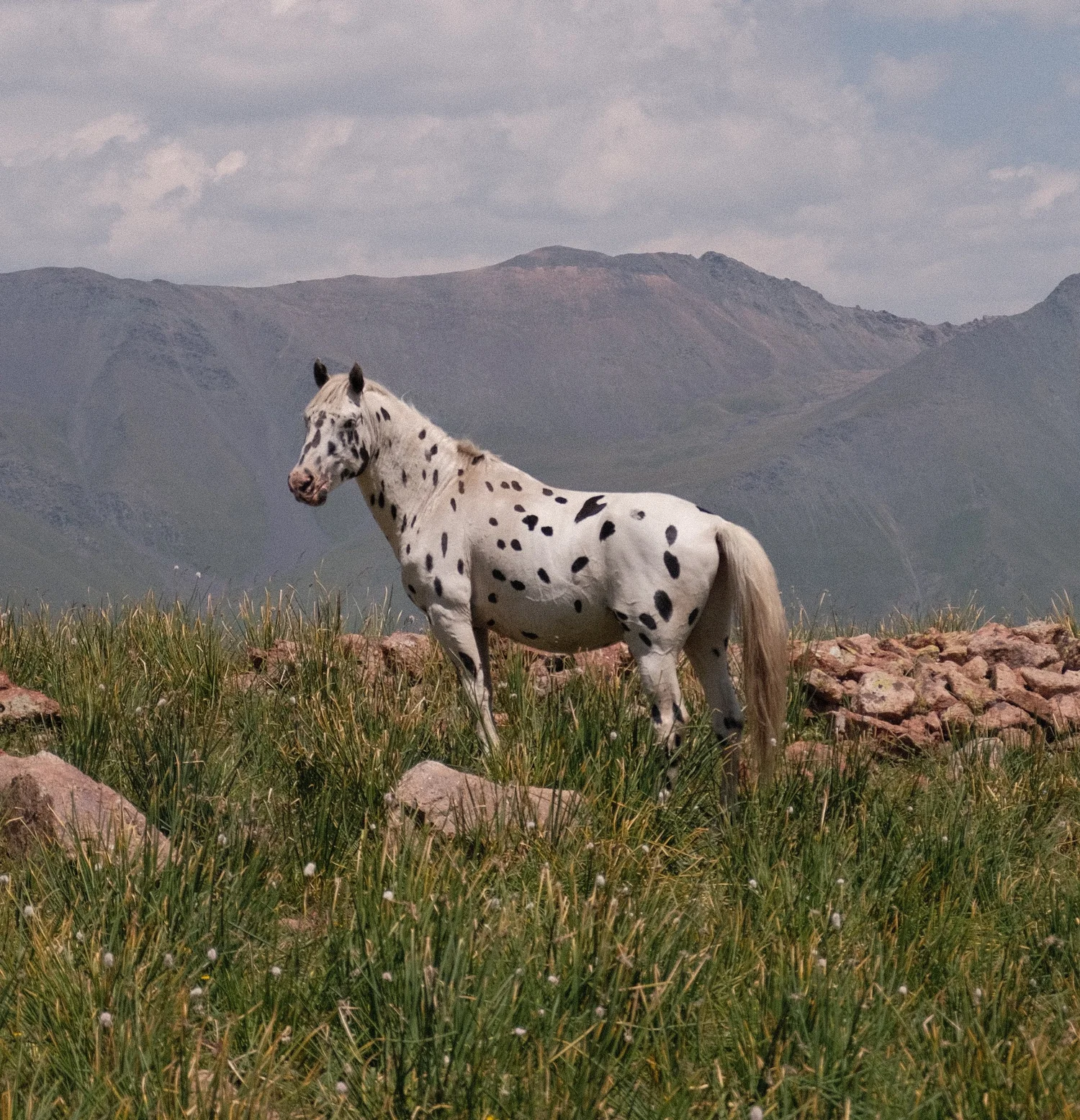
Chaar Suluu
The first Chaar horse found, and the stallion at the heart of the True Appaloosa documentary that started all of this.
How Munarbek found him →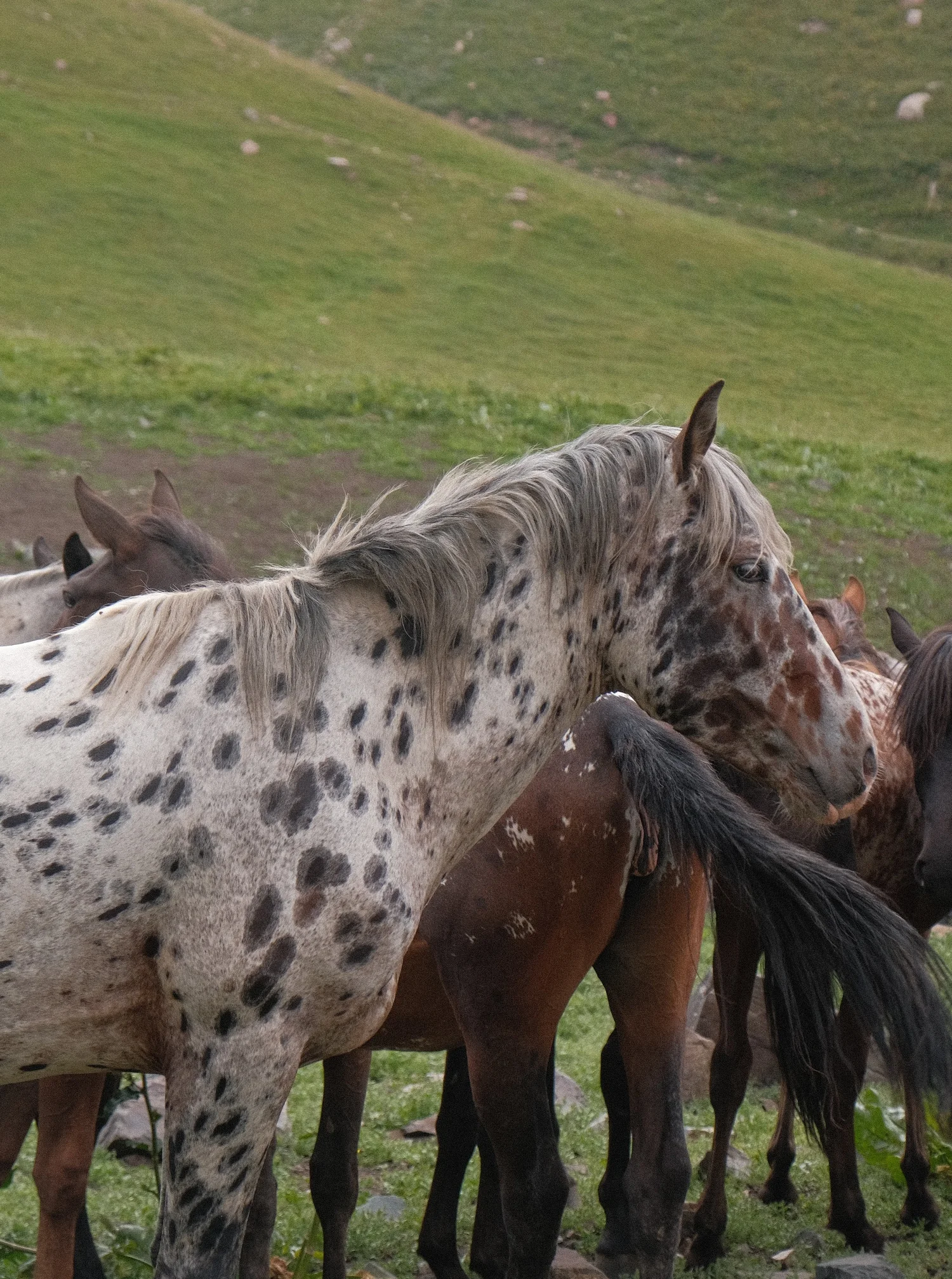
stallion
Tan Suluu
His name means "morning beauty". He also goes by Ottaway, after the son of Alice Shirley, the artist who drew our logo.
The story behind his name →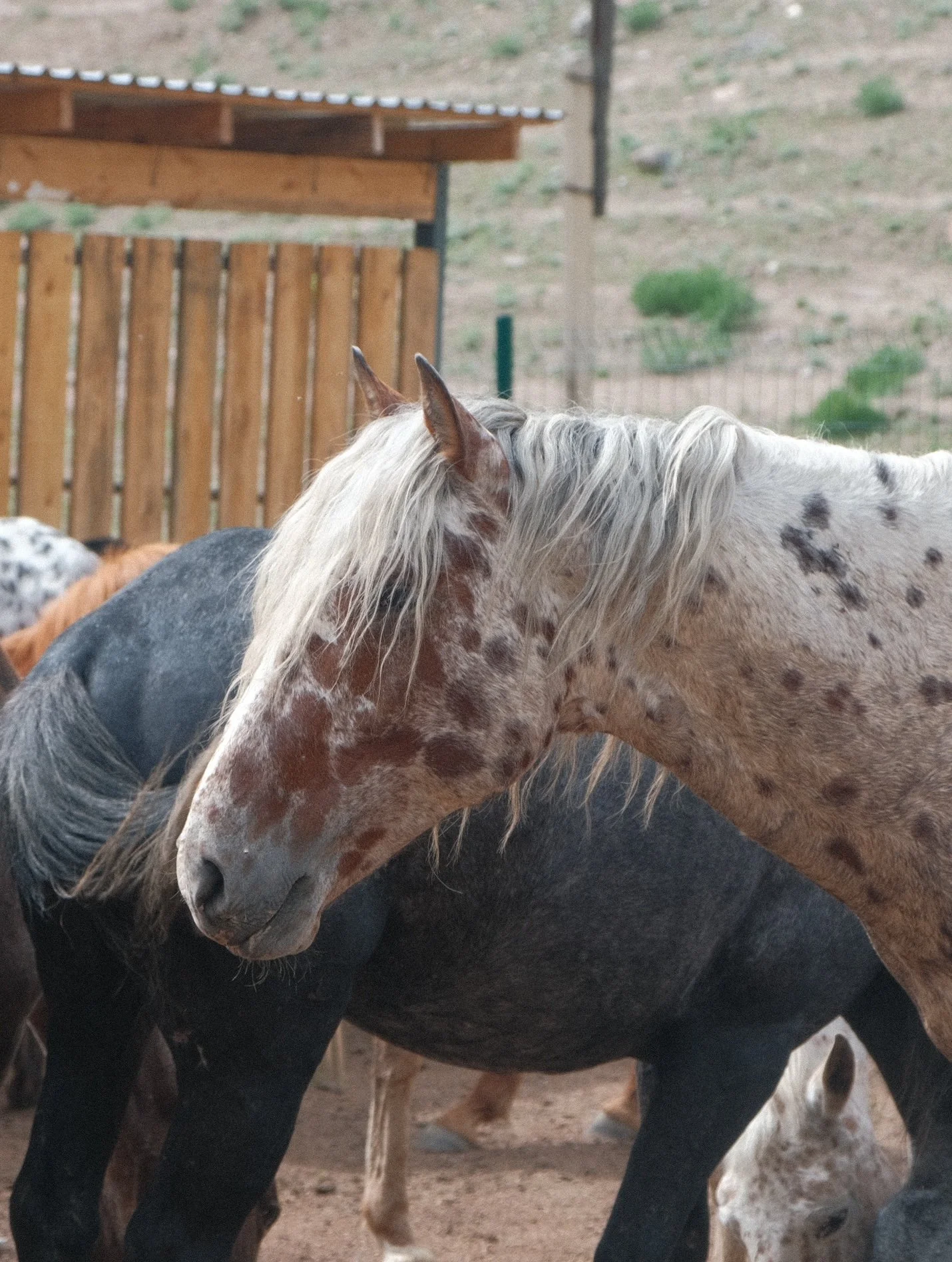
stallion
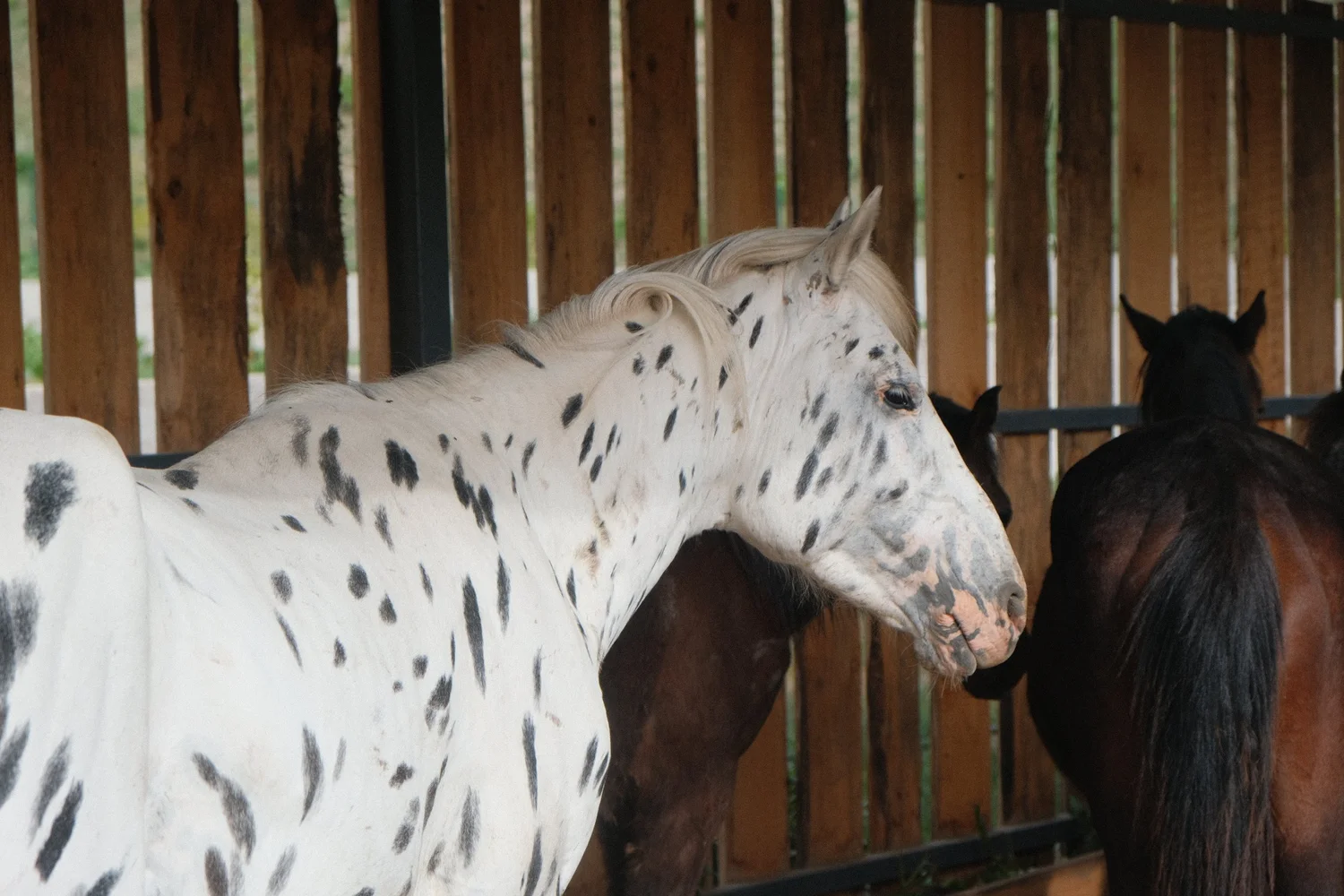
Ak Suluu
His name means "white beauty" in Kyrgyz. Bred in our own programme, he has had a herd of his own for two years.
stallion
Chaarlie
A son of Chaar Suluu. He is four, and 2026 was his first year with a herd of his own.
how they live
Raised the nomad way
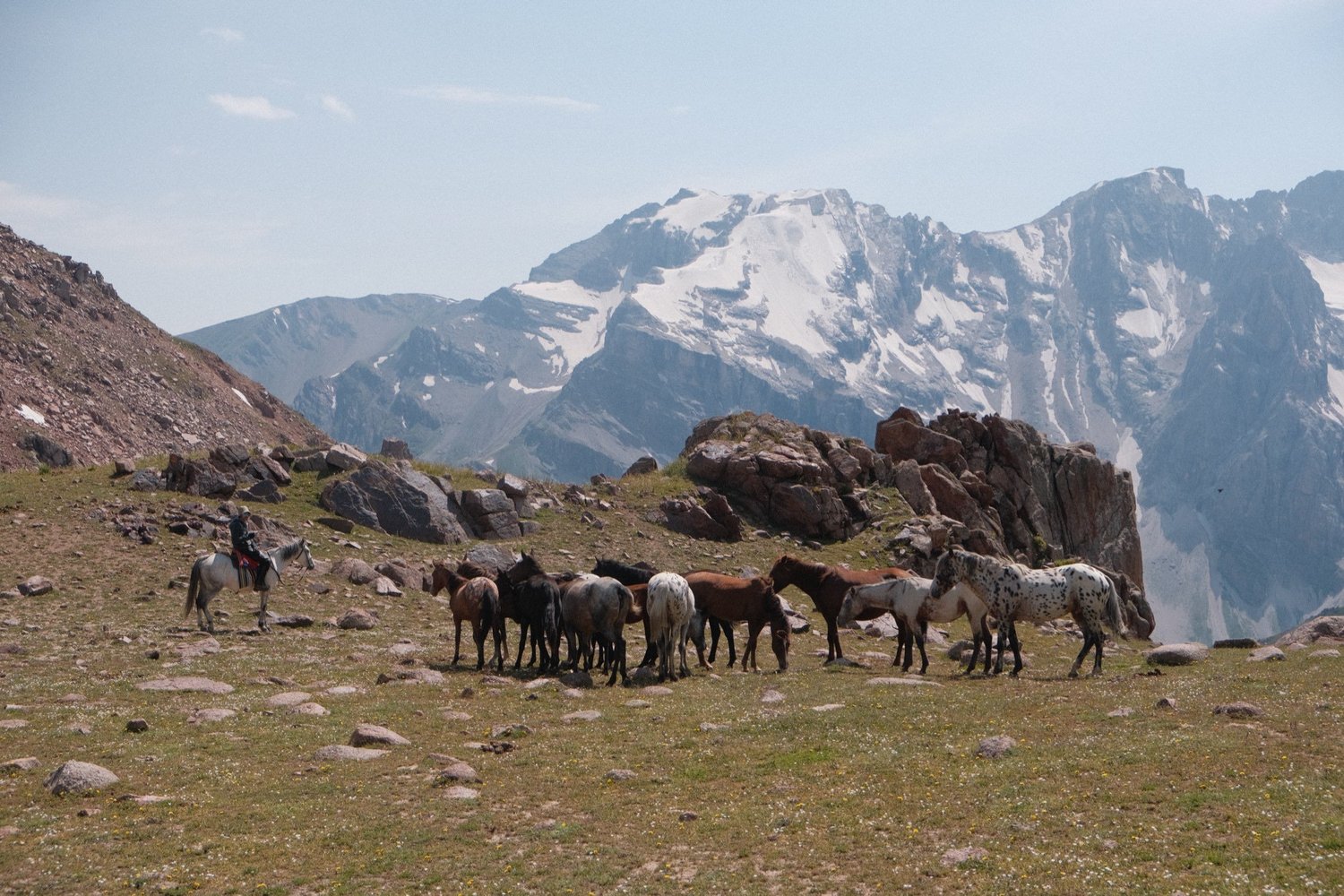
We raise the Chaar the way Kyrgyz herders always have. Each stallion lives with his own herd of mares, and the herd breeds naturally. There is no artificial insemination and no semen sent off around the world, as is common in modern breeding. A horse finds its herd and, ideally, stays with it for life, as Chaar Suluu has with his.
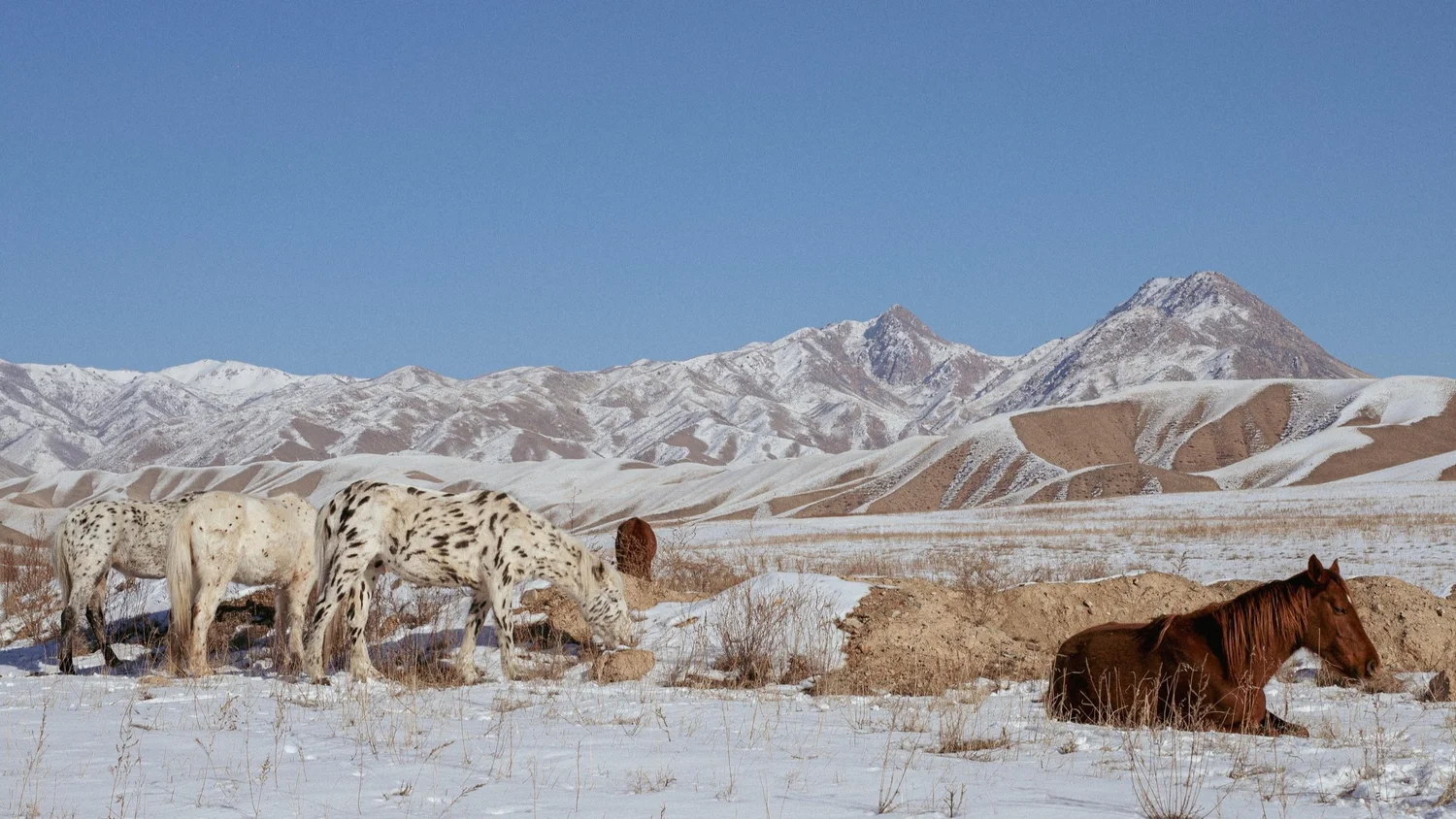
In summer the herds roam the high pastures semi-wild, finding their own grazing, with the horsemen riding up once or twice a week to check on them. In winter, when snow closes the pastures, they come down to Chaar Ranch for shelter and extra food.
That life is what made them: intelligent, brave and sure-footed on steep ground, with strong natural hooves and the stamina to carry a rider for days. Take a Chaar out of the mountains and into a stable or a paddock, and over the generations those traits slowly fade.
Raising horses this way takes knowledge, skill, patience and a great deal of time. It is far harder than keeping them safe in a stable, behind a fence. It is also the only way to keep the breed we are trying to save.
how to recognise one
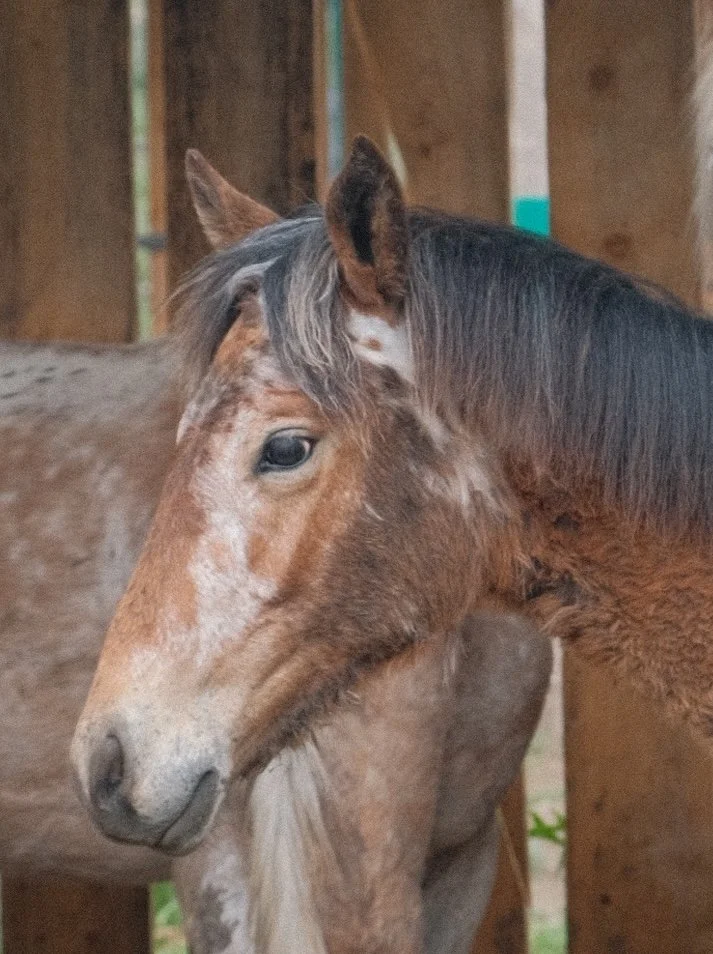
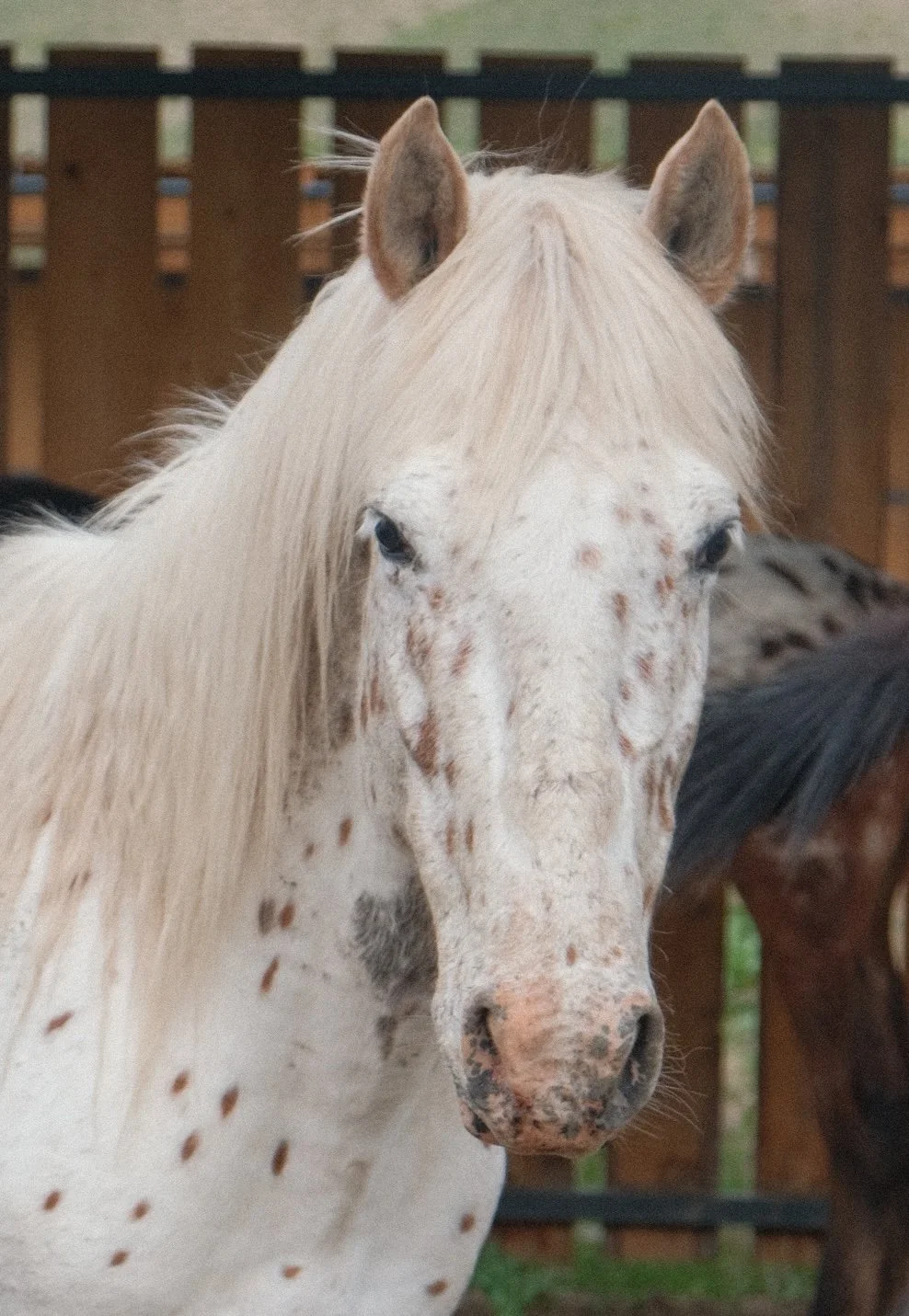
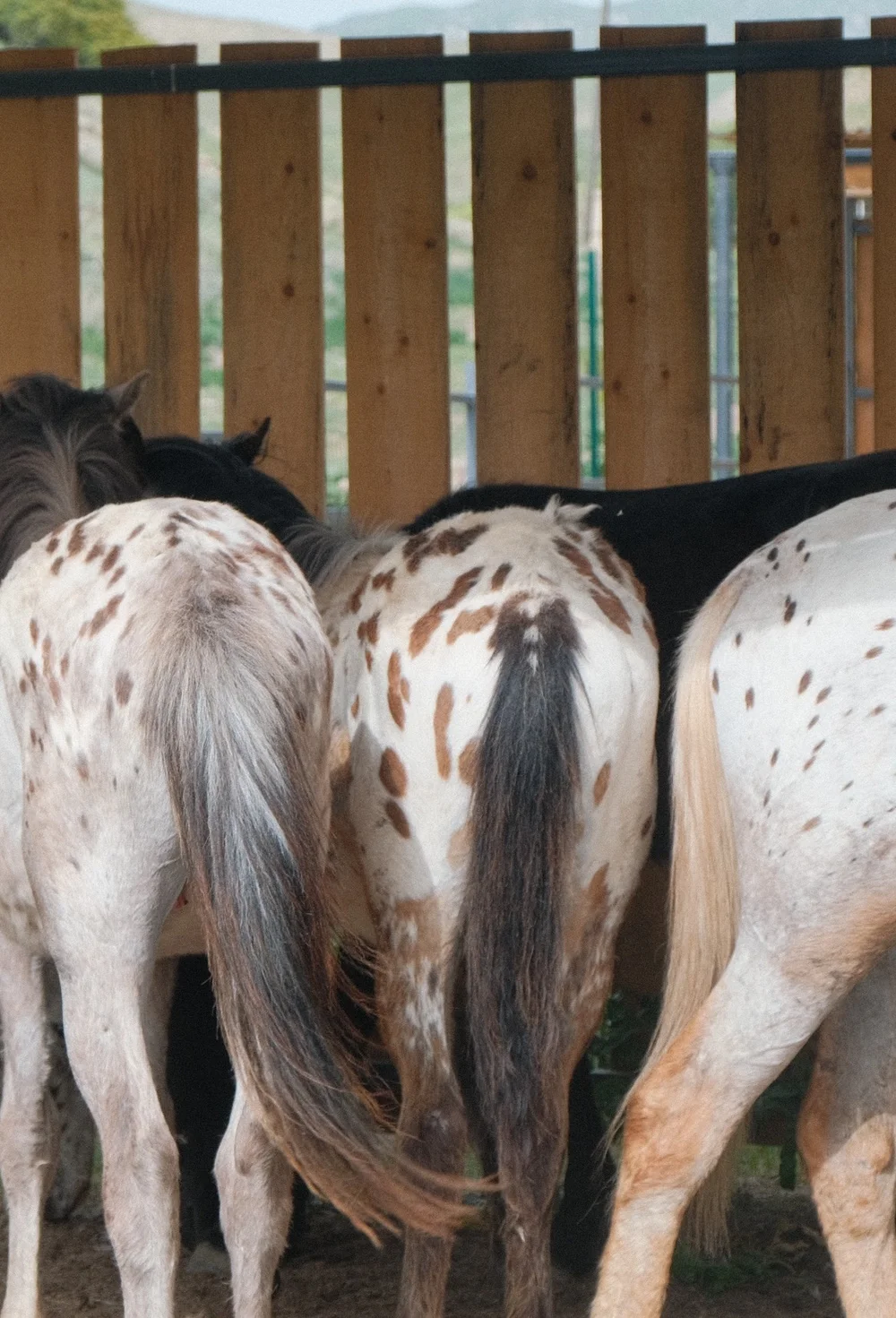
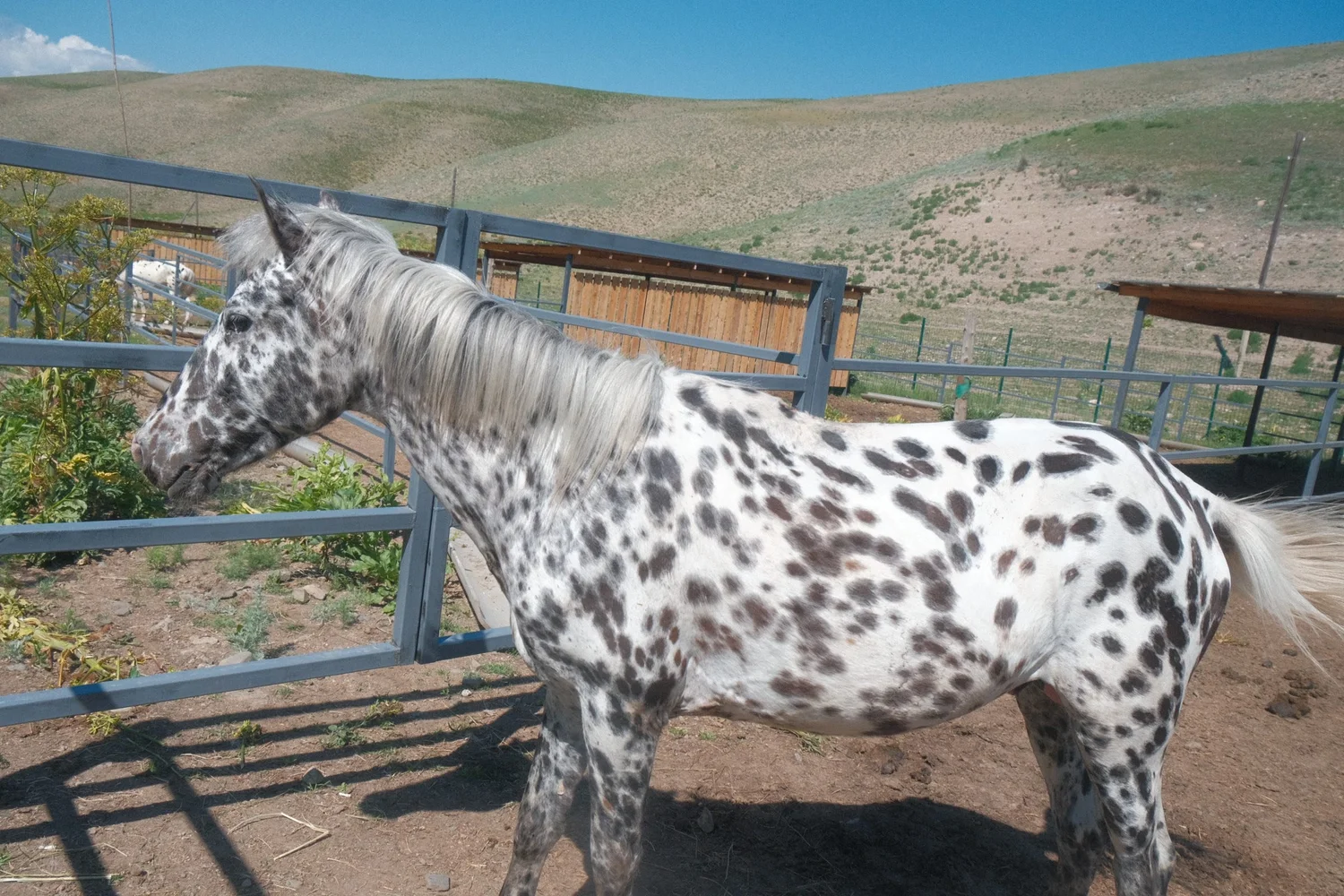
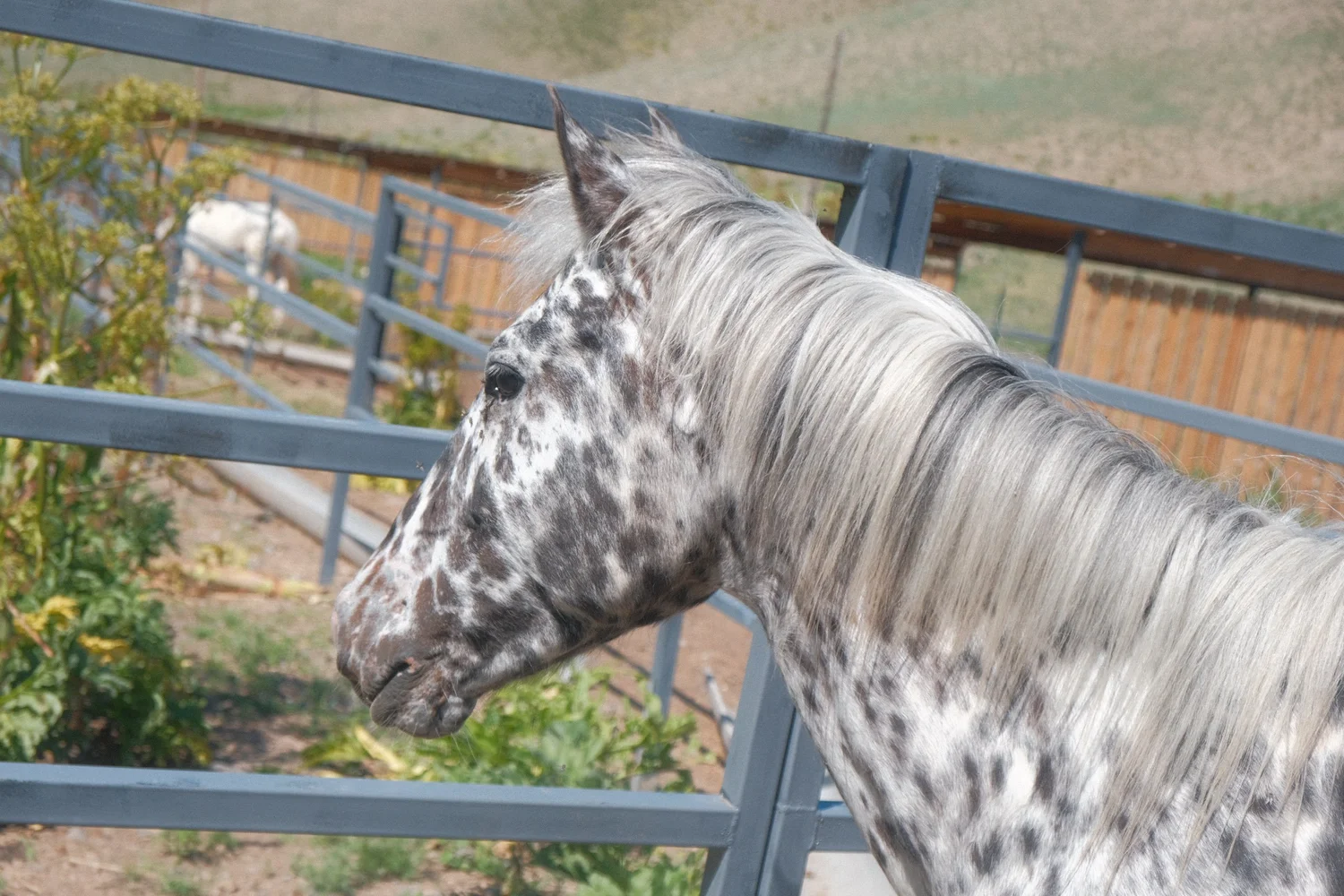
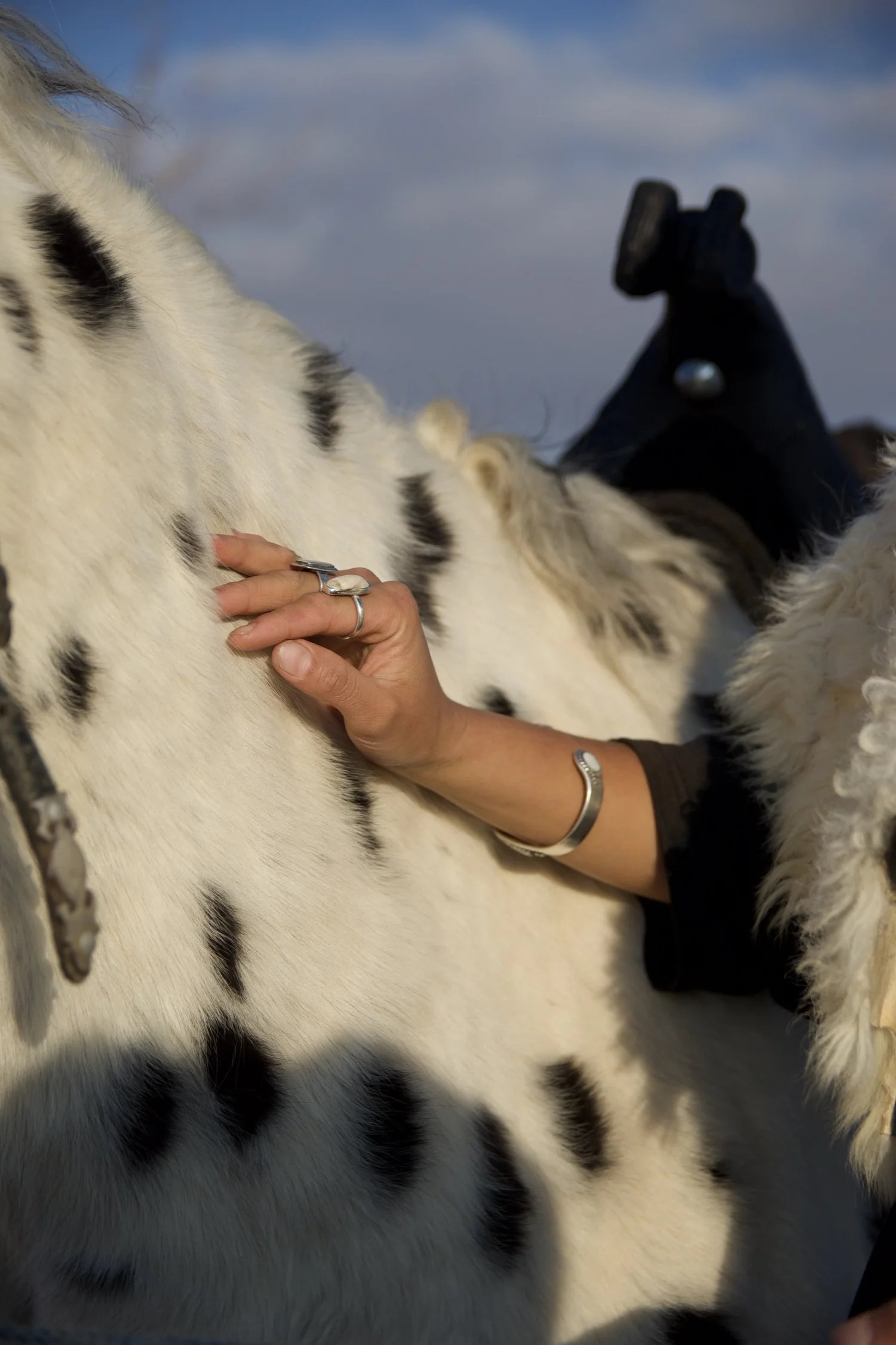
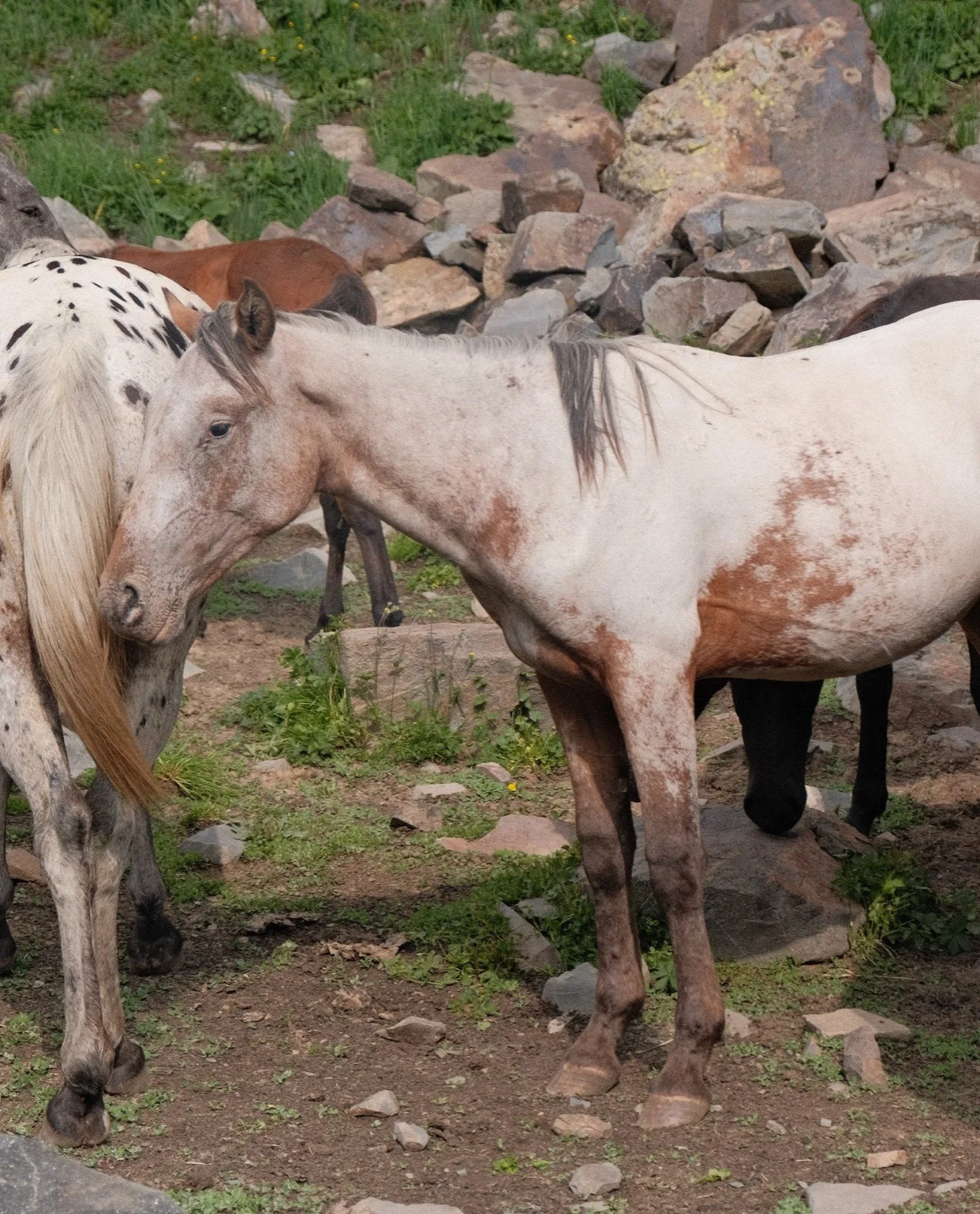
Four signs of a Chaar horse
Chaar horses carry the leopard complex traits, the same set seen in the Appaloosa. Here's what to look for.
-
01
The coat
Spots are the obvious one. They can cover the whole body (leopard), sit in a white patch over the hips (blanket), or appear as flecks across a darker base colour like bay, black or chestnut (snowflake).
Look closely and many spots have a soft "halo", a ring where the dark skin shows through lighter hair around the edge.
-
02
The eyes
A ring of white around the iris, called the sclera, easy to see even when the horse is looking straight at you. Most horses hide it.
-
03
Skin and hooves
Mottled, speckled skin around the muzzle, eyes and under the tail, and hooves marked with vertical light and dark stripes.
-
04
The gait
Hardest to see in a photo, easiest to feel in the saddle. Many Chaar horses move with a smooth four-beat gait, close to the old "Indian Shuffle", so riders can cover long mountain distances without the jolt of a trot.
what the dna showed
Spots that may have started in Asia
Dr E. Gus Cothran of Texas A&M University analysed samples taken from 30 of our horses in 2012. In the documentary True Appaloosa, he explained what he found.
"About half the horses tested carried the Leopard complex gene responsible for the Appaloosa spotting pattern. Comparing that region across Kyrgyz, US and European horses suggests, though doesn't prove, that the mutation may have first arisen in Asia. Roughly half also carried the DMRT3 variant linked to a smooth lateral gait, a trait rarely seen in Asian horses."
Dr E. Gus Cothran, Clinical Professor, Veterinary Medicine & Biomedical Sciences, Texas A&M University, in True Appaloosa
That first analysis was later withdrawn and is no longer available. The 2022 Texas A&M report on the same horses looked at their wider genetic make-up rather than the spotting, so it neither confirms nor rules out a link with the Appaloosa.
part of kyrgyz life
A horse woven into the culture
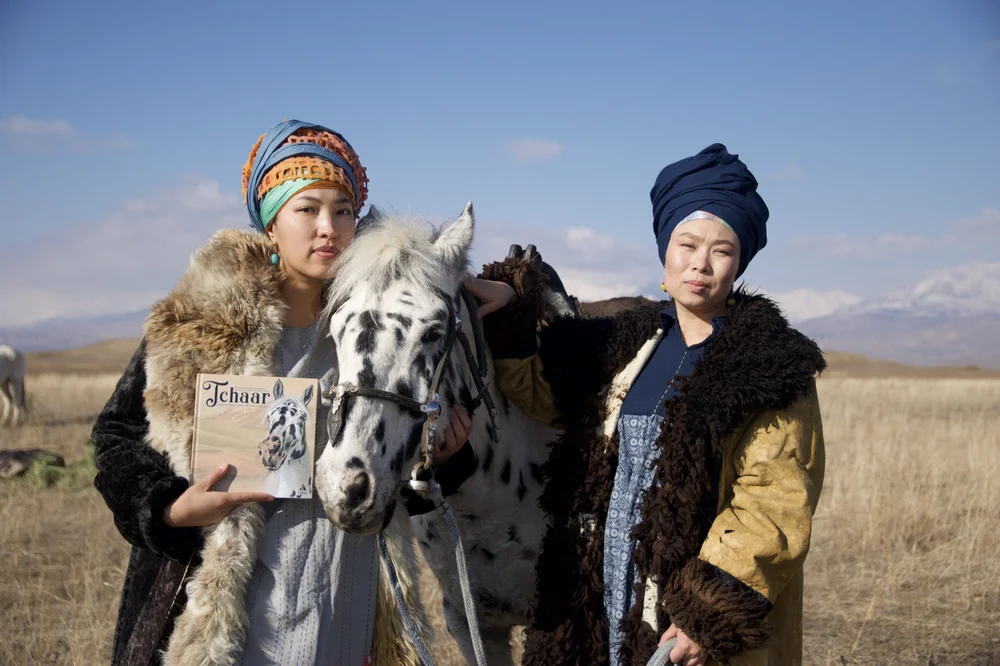
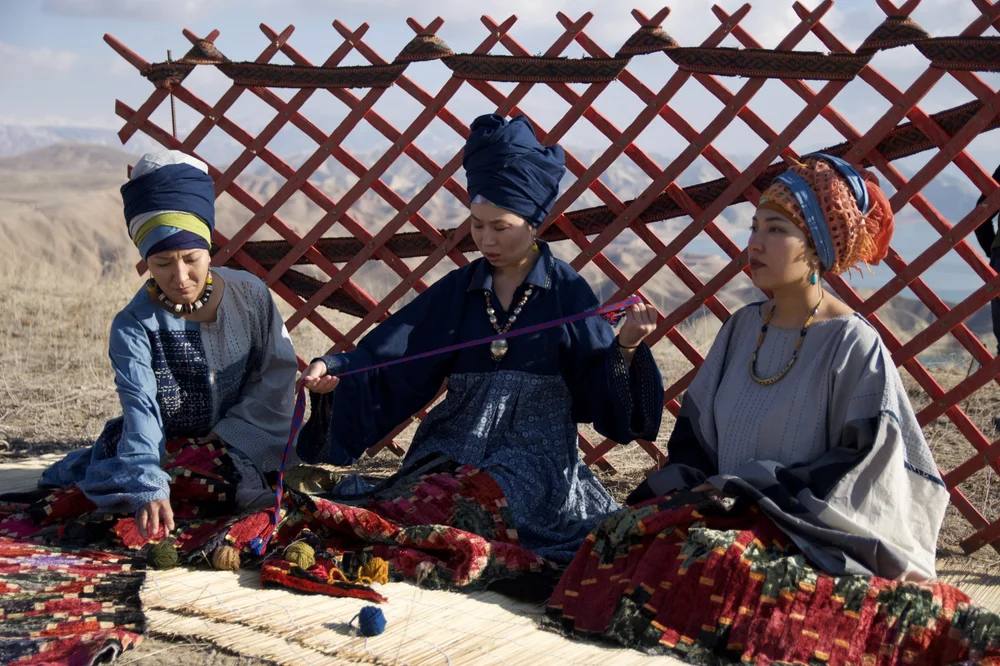
For nomadic families, horses meant everything: how you travelled, herded, traded and celebrated. The spotted horse has its own place in that story. In the epic of Manas, Kyrgyzstan's national epic, the twelve-year-old Manas rides into his first fight on a horse called Toruchaar. In the legend of Tolubai Synchy, the horse-reader Tolubai passes over every fine horse brought to him and chooses a scruffy chaar with forty wounds, which later outruns the king's riders. Many Chaar horses still move with the jorgo, the smooth ambling gait riders have prized for long days in the saddle.
Bringing the Chaar back keeps a piece of that culture alive in the place it came from, worked by horsemen whose families have always done this work.
where we are now
From one stallion to 80+ horses
What began with Chaar Suluu is now a carefully managed herd of 80+ Chaar horses at Chaar Ranch. New foals arrive every spring, and each one is recorded, followed and raised on the mountain.
- Protect rare Chaar bloodlines
- Keep breeding ethical and rooted in Kyrgyzstan
- Preserve nomadic horse culture in Central Asia
Monthly supporters are what keep the herd going through the winters. Most give €15 a month; any amount helps.
Secure payments · cancel any time
quick facts
Breed standard
- Breed
- Kyrgyz Chaar horse
- Origin
- Kyrgyzstan
- Height
- 140 to 160 cm (13.3 to 15.3 hh), ideally 145 to 158 cm
- Foundation sire
- Chaar Suluu
- Used for
- Riding, mountain work, endurance and expeditions, free-ranging herds, heritage breeding
- Coat patterns
- Leopard, few spot leopard, blanket, snowcap, snowflake, varnish roan, frost, marble, and other leopard complex patterns
- Appaloosa traits
- Leopard complex coat, mottled skin, striped hooves, visible white sclera
- Gait
- Often a smooth four-beat gait, similar to the Indian Shuffle
our breed definition
The Chaar horse is a spotted mountain horse of Kyrgyzstan that carries the leopard complex and shows the range of characteristics also seen in the Appaloosa. Developed in the mountains of Kyrgyzstan from the descendants of the foundation stallion Chaar Suluu through the Chaar breeding programme, the breed combines endurance, soundness, adaptability, strong natural hooves, the ability to live in free-ranging herds year-round, and the frequently occurring smooth gait known as the jorgo, or Indian Shuffle. It is not yet officially recognised as a breed. The Chaar horse represents both a living genetic heritage and a cultural legacy of Kyrgyzstan.