The Kyrgyz Chaar Horse
Kyrgyz chaar horse is known for its spotted coat caused by a genetic mutation. The Chaar breed is rare and culturally significant, living in the rugged terrain of Kyrgyzstan and revived through our successful breeding program. Chaar horses are an important part of Kyrgyz culture, used for transportation and herding, and featured in traditional folklore and ceremonies.

A breed that was almost lost forever…

The Chaar horse was never meant to survive.
For centuries, it lived alongside nomads in Kyrgyzstan — shaped by nature, not by humans.
Then it was forgotten, no breeding programs, no protection, no system and slowly, it began to disappear.
Today, only a few remain. Not as a breed. But as the last traces of something that once existed. Now, for the first time, there is a real effort to bring it back led by Munarbek Kuldanbaev and the Chaar Appaloosa Association. But this is the critical moment. Because if it disappears now — it disappears forever.
Unique Characteristics
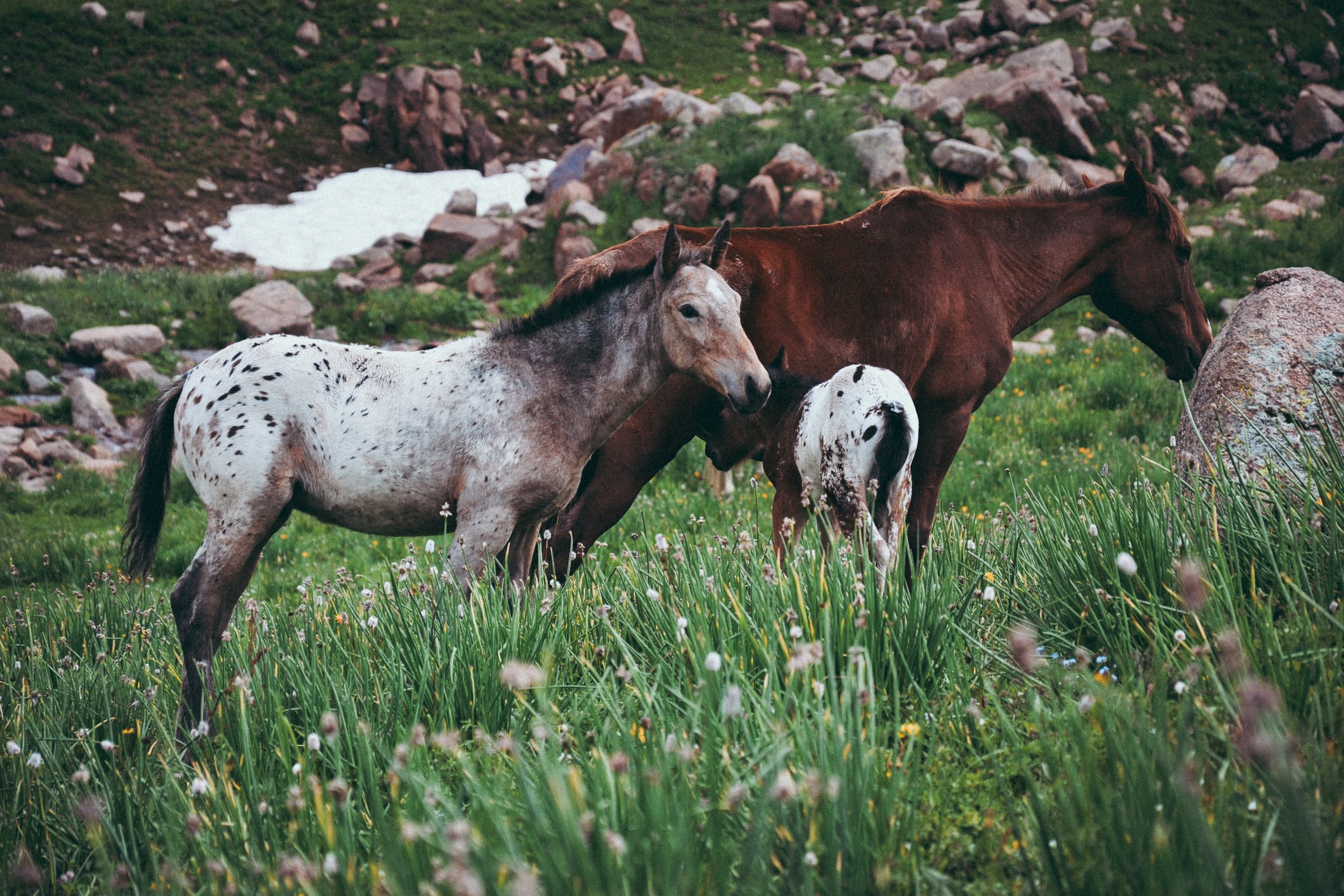
The Chaar horse is known for its distinctive spotted coat, which comes in a variety of patterns and colors. This unique coat is caused by a genetic mutation that affects the horse's skin pigmentation, resulting in spots or other patterns on their coat. The Chaar horse is also known for its calm temperament, making it a popular choice for trail riding and other recreational activities.


Mountain Living
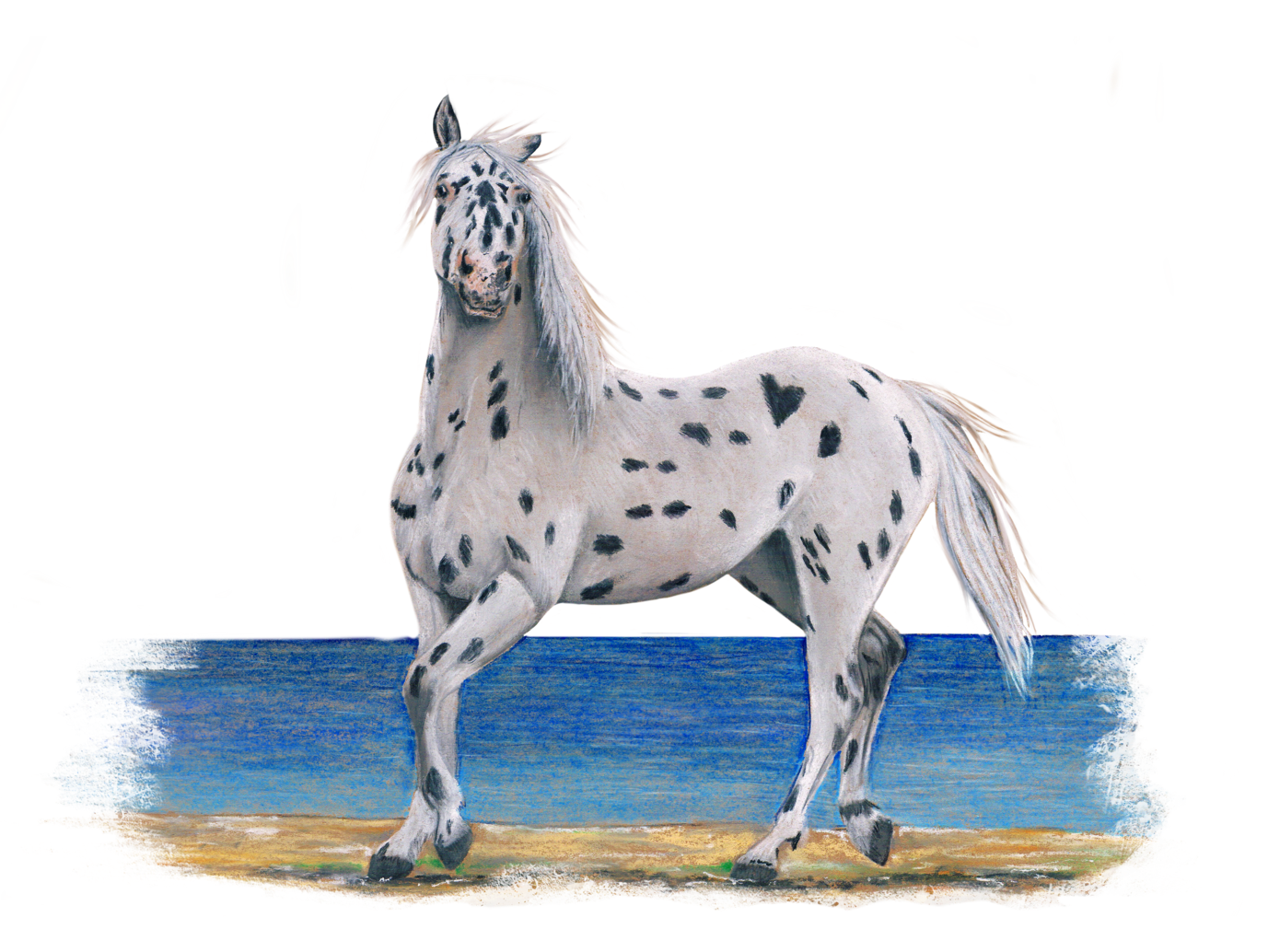
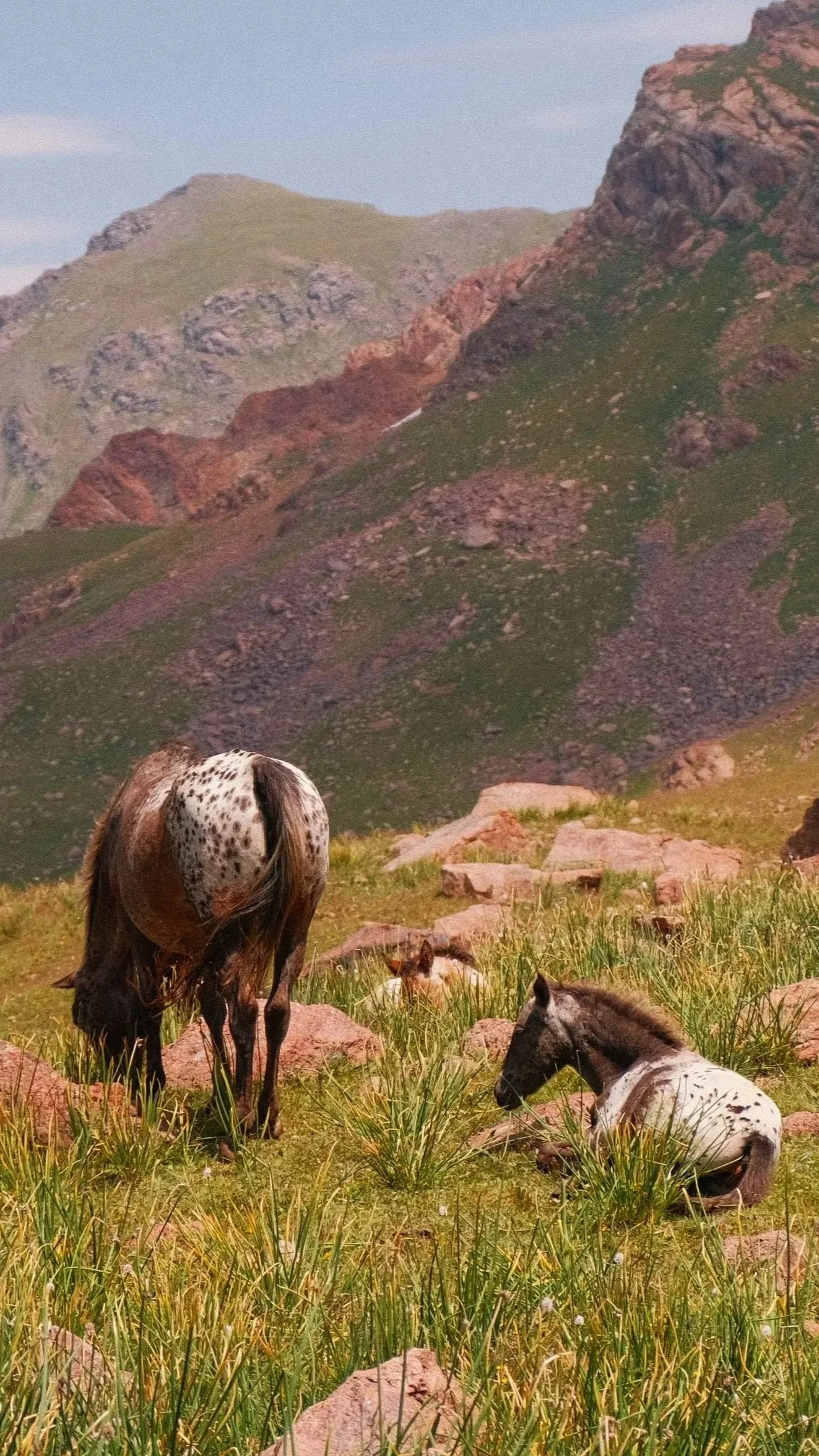
The Chaar horses are known for their ability to live in the rugged and mountainous terrain of Kyrgyzstan. They are allowed to roam freely without fences, and are watched over by herders to ensure their safety. Living in such a harsh environment has led to the development of a strong and resilient breed of horse, capable of enduring the challenges of mountain life.

Chaar Breeding Program
The Chaar breeding program is a mission to save one of the rarest horse lineages in Kyrgyzstan and across Central Asia.
What began with just one stallion has grown into a carefully managed population of over 70 Chaar horses, preserving unique Appaloosa patterns and rare genetic lines that were once close to disappearing.
Each season, new foals are expected, strengthening the future of this endangered horse breed.
Your support directly helps:
• Protect rare Chaar bloodlines
• Sustain ethical horse breeding in Kyrgyzstan
• Preserve nomadic horse culture in Central Asia
This is more than breeding — it is the recovery of a lost heritage.
Secure monthly contribution | cancel anytime | Direct Impact

A Culturally Significant Breed
The Chaar horse is an important part of Kyrgyz culture, and has been for centuries. The horses are used for transportation, herding, and are often featured in traditional folklore and ceremonies. The revival of the Chaar breed through the breeding program has helped to preserve this important part of Kyrgyz heritage, ensuring that these horses will continue to be a symbol of beauty and resilience for generations to come.
Chaar Horse Breed Standard
-
Kyrgyz Chaar Horse
Kyrgyzstan
-
The CHAAR horse is a spotted mountain horse of Kyrgyzstan sharing genetic roots with the Appaloosa horse.
The modern CHAAR population was established in Kyrgyzstan from the descendants of the foundation stallion Chaar Suluu and the foundation mares of the CHAAR breeding program.
Genetic research conducted in cooperation with Texas A&M University has confirmed genetic compatibility and a close relationship between CHAAR horses and Appaloosas, supporting their shared historical ancestry. At the same time, CHAAR represents a distinct mountain-adapted breeding population developed under the environmental conditions of Kyrgyzstan through its own breeding program.
-
* Riding horse
* Mountain horse
* Endurance and expedition horse
* Free-ranging herd horse
* Heritage horse
The CHAAR is a hardy, intelligent and versatile horse that combines the distinctive characteristics of the Appaloosa with adaptation to the mountainous environment of Kyrgyzstan.
The breed is characterized by its ability to thrive under year-round free-ranging herd management, strong natural hooves, sound temperament, endurance, sure-footedness and adaptability to rugged mountain terrain.
-
Stallions
140–160 cm (13.3–15.3 hh)
Mares
140–160 cm (13.3–15.3 hh)
Preferred breeding range:
145–158 cm (14.1–15.2 hh)
Conformation
General Type
The CHAAR is a compact, well-balanced mountain horse with strong bone, good muscling and functional conformation developed for endurance and movement in challenging terrain.
The breed emphasizes durability, athleticism, adaptability and longevity rather than extreme size or specialization.
Head
* Medium-sized
* Broad forehead
* Straight or slightly concave profile
* Large expressive eyes
* Broad nostrils
* Alert yet calm expression
Neck
* Medium length
* Strong and muscular
* Well set and smoothly connected to the body
Withers
* Moderately defined
* Well developed
* Suitable for saddle work and rider comfort
Body
* Deep-bodied
* Broad chest
* Well-sprung ribs
* Strong loin connection
* Good heart girth capacity
Back
* Medium length
* Strong and well coupled
* Suitable for long-distance riding
Croup
* Long
* Broad
* Well muscled
* Slightly sloping
Limbs
* Strong bone structure
* Correct alignment
* Well-developed joints
* Durable tendons and ligaments
Hooves
* Dense hoof horn
* Strong and durable
* Naturally adapted to rocky mountain terrain
-
The movement of the CHAAR horse should be:
* Free and balanced
* Efficient and ground-covering
* Sure-footed
* Comfortable for long-distance travel
* Adapted to mountainous terrain
Characteristic Gait
Many CHAAR horses exhibit a naturally smooth four-beat gait similar to the historic Indian Shuffle described in Appaloosa horses.
This gait provides:
* Exceptional rider comfort
* Reduced rider fatigue
* Efficient long-distance travel
* Smooth movement across uneven terrain
The presence of this gait is considered a desirable breed characteristic.
Temperament
The CHAAR horse should be:
* Intelligent
* Calm
* Courageous
* Cooperative
* Adaptable
* Naturally resilient
The breed retains the independence and strong social instincts typical of free-ranging herd horses.
-
All coat colors and color patterns recognized in the Appaloosa breed are permitted in the CHAAR breed.
Recognized leopard complex patterns include:
* Leopard
* Few Spot Leopard
* Blanket
* Snowcap
* Snowflake
* Varnish Roan
* Frost
* Marble
* Other recognized expressions of the Appaloosa Leopard Complex
Appaloosa Characteristics
A CHAAR horse should display one or more Appaloosa characteristics, including:
* Leopard complex coat pattern
* Mottled skin
* Striped hooves
* Visible white sclera around the eye
These characteristics are considered defining breed traits and reflect the historical and genetic relationship between CHAAR and the Appaloosa horse.
-
A CHAAR horse should demonstrate:
* Ability to live year-round under free-ranging herd management
* Adaptation to mountain climates
* High endurance
* Efficient utilization of natural forage resources
* Strong health and soundness
* Good maternal qualities
* Stable herd behavior
* Confident movement across rugged terrain
The foundation sire of the modern CHAAR breed is:
Chaar Suluu
-
To preserve and develop a spotted mountain horse of Kyrgyzstan that:
* Retains the complete range of Appaloosa characteristics
* Maintains documented historical and genetic ties to the Appaloosa horse
* Possesses exceptional endurance and soundness
* Is adapted to mountain environments
* Thrives under year-round free-ranging herd management
* Maintains genetic diversity
* Provides comfortable riding qualities, including smooth natural gaits
* Preserves the cultural heritage associated with the CHAAR horse
Official Breed Definition
The CHAAR horse is a spotted mountain horse of Kyrgyzstan sharing genetic roots with the Appaloosa horse and retaining the full range of Appaloosa characteristics. Developed in the mountains of Kyrgyzstan from the descendants of the foundation stallion Chaar Suluu and the CHAAR breeding program, the breed combines endurance, soundness, adaptability, strong natural hooves, year-round free-ranging herd management capability, and the frequently occurring smooth gait known as the Indian Shuffle. The CHAAR horse represents both a living genetic heritage and a cultural legacy of Kyrgyzstan.
“The Kyrgyz Chaar Horse genetically is one of the central Asian horses that include the Mongolian horse, the Yakutian Horse and the Altai horses. These horses are distinct from the more western/Middle Eastern breeds such as the Arabian, Akhal Teke and Turkoman, although overall these horses are more related to each other than they are to horse breeds from Europe. Of course this statement is based upon the sample of 30 Kyrgyz horses that we sampled in 2012 and does not represent the whole of the horses of this nation or the region. However, the consistency of the relationships based upon geography and history indicates that the horses that we have tested of the type of horses that would be found in the region. The genetic diversity of the Kyrgyz horse is good, being just slightly higher than the average level for domestic horses, but is indicative of a predominantly closed breeding population and not a mixed group of diverse horse types. About half the horses tested showed the Leopard complex spotting pattern (Lp), known in the USA as Appaloosa, and the genetic mutation that causes the pattern was the same as that seen in Lphorses around the world. Comparison of the genomic region around Lp of the Kyrgyz horses to that found in other Lp horses from the US and Europe suggest, but does not prove, that the Lp mutation arose in Asia. More work in this area is needed, including sampling Lp horses from other parts of Asia. As well, somewhere around half the Kyrgyz horses we tested carried the genetic variant of the DMRT3 gene associated with a lateral gait. This variant, popularly known as the Gait Keeper Gene, is widely distributed worldwide but it was interesting to find it here because it is not commonly seen in Asia. Overall, the results of testing the Kyrgyz horses have provided new insights into the genetics of horses and have shown that more testing of horses from this part of the world could provide valuable information about the genetics of the horse.”
E. Gus Cothran
Clinical Professor, Veterinary Medicine & Biomedical Sciences, Texas A&M University, College Station, Texas.