Chaar Ranch: a place where a rare Central Asian horse is being reborn
In winter, up in the mountains of Kyrgyzstan, the day ends too early. By six in the evening it's already dark across the valleys, and that's when the hardest part of the day begins: feeding the herd. On the old farm where we started, in the freezing cold and without proper infrastructure, that meant six straight hours of work from 6 PM until midnight.
Every single day.
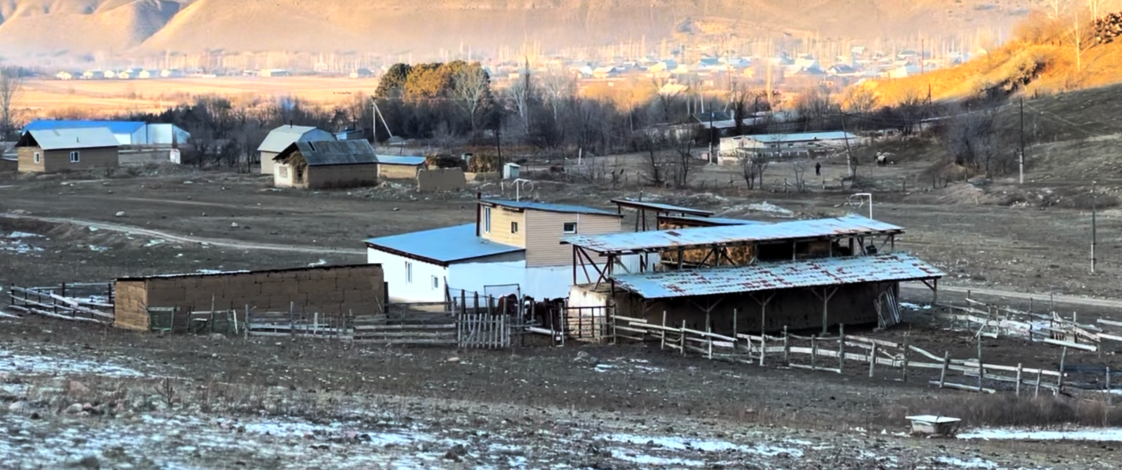
Old but beloved farm where we started the Chaar revival program
We were working in cramped enclosures with a herd that kept growing, running right at the edge of what that place could handle. We lost time there, and energy, and resources. What we never lost was the belief that the Chaar horse needed to be preserved and given a real future.
That farm was more than just somewhere to keep horses. It was where everything began, and over the years it let us build a core breeding population that still produces foals every year, the foundation everything since has been built on.
Alice Shirley’s painting
The turning point came in 2024, when the artist Alice Shirley offered her support. Alice designed the silk scarf "Appaloosa des Steppes" for Hermès in 2017, and she created a new painting dedicated to the Chaar in just a few days. It sold for $23,000, and every cent went to the Chaar Appaloosa Association, which used it to buy the land for the ranch.
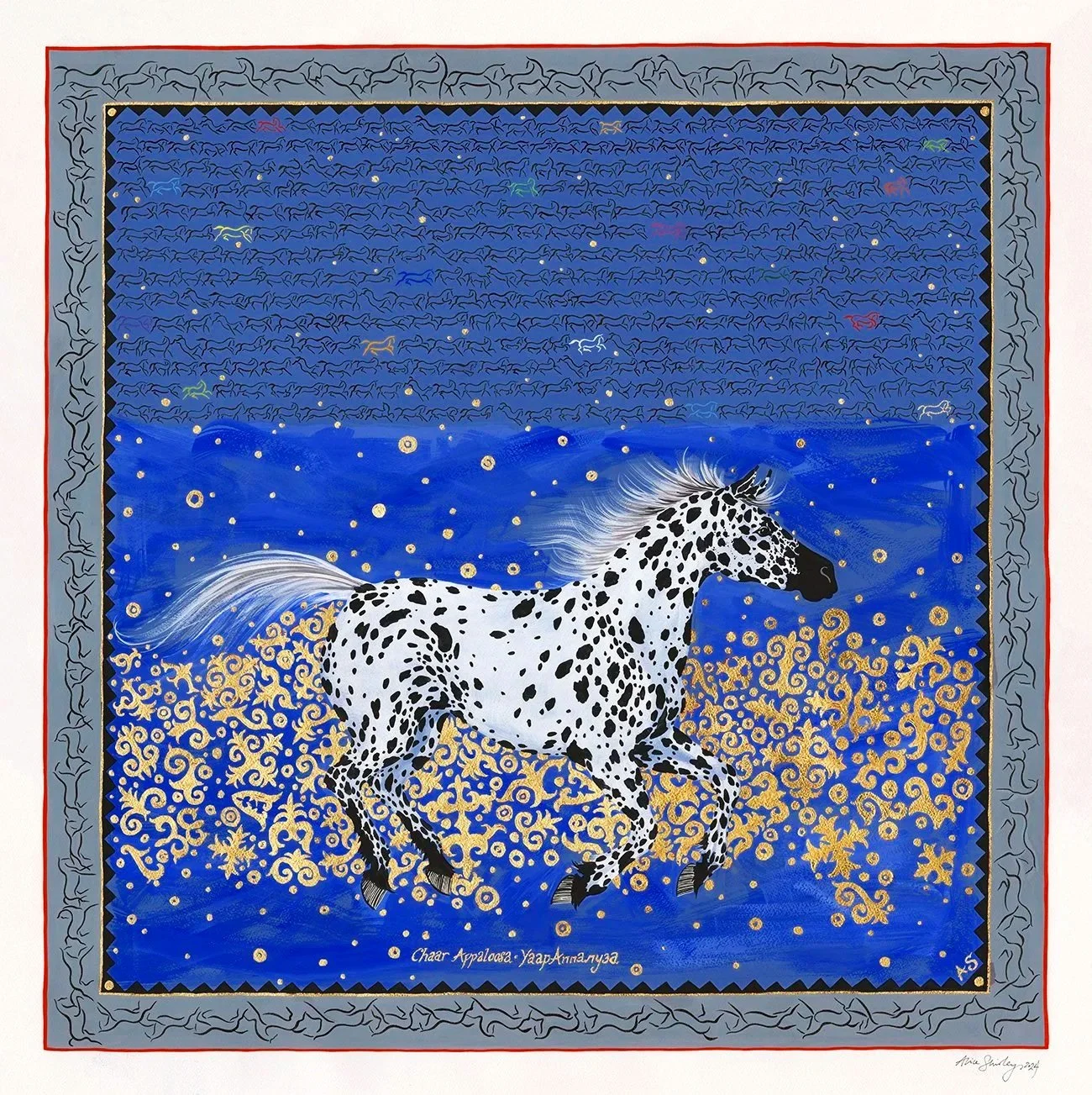
Chaar Appaloosa artwork from Alice Shirley
That gave us a real decision to make. We needed a truck badly: something to move horses safely, bring in and store forage, and cut down the hours lost every day getting animals and feed across this kind of mountain terrain. We still need one today. But with those funds in hand, we chose to think further ahead instead, and used the money to buy land in the Ketmen-Tobo Valley, a place where the mountains still carry the memory of old civilizations, old battles, and the Silk Road that once ran through here.
That purchase became Chaar Ranch, a real base for breeding, for nature, for culture and art to sit alongside one extraordinary horse.
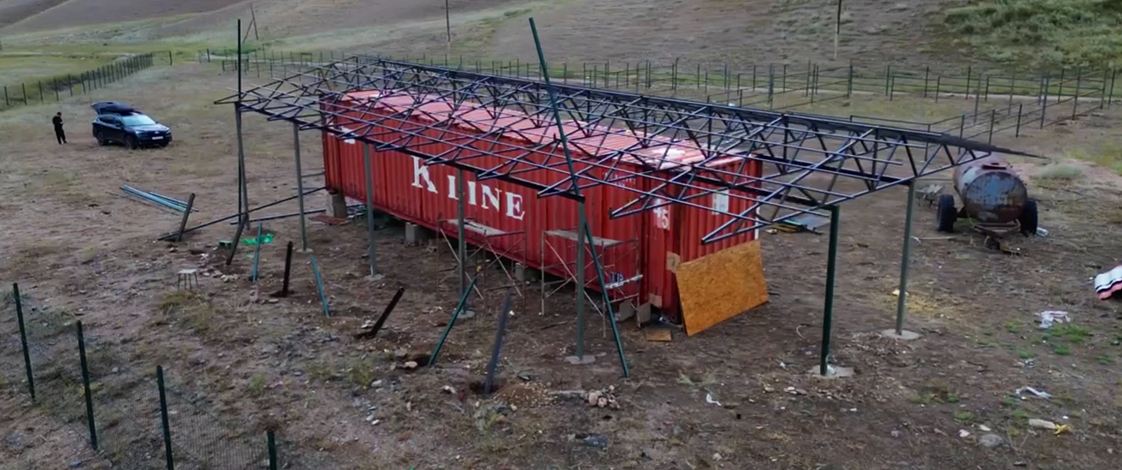
Beginning of construction of the new Chaar Ranch
Life on the new ranch
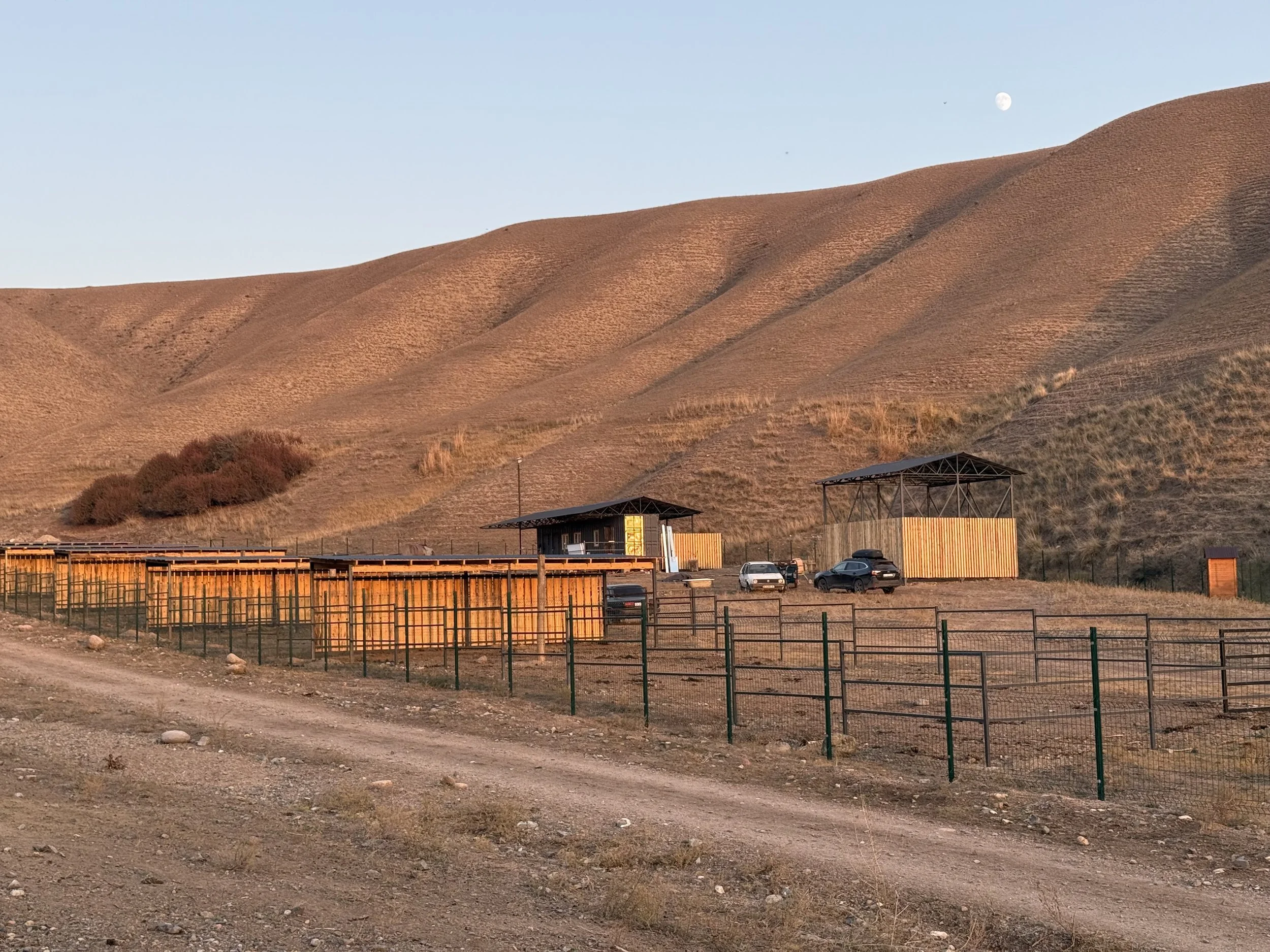
We built the ranch through 2025, with new paddocks and infrastructure, and the difference showed right away. Feeding, which used to take up to six hours, now takes one or two. The new layout has also cut our feed loss dramatically.
The new Chaar Ranch location, phase 1 complete
Today the ranch is home to more than 70 horses: 4 breeding stallions, 22 mares in active breeding, and 31 young mares who'll enter the breeding program over the next two years, alongside our working horses and young stock. In 2026 we're expecting around 20 foals, the next real step forward for the Chaar population.
But we're not finished. This past winter made clear what we still need: more paddocks, a proper system for separating the herd, and a handling chute so we can give the horses safe veterinary care.
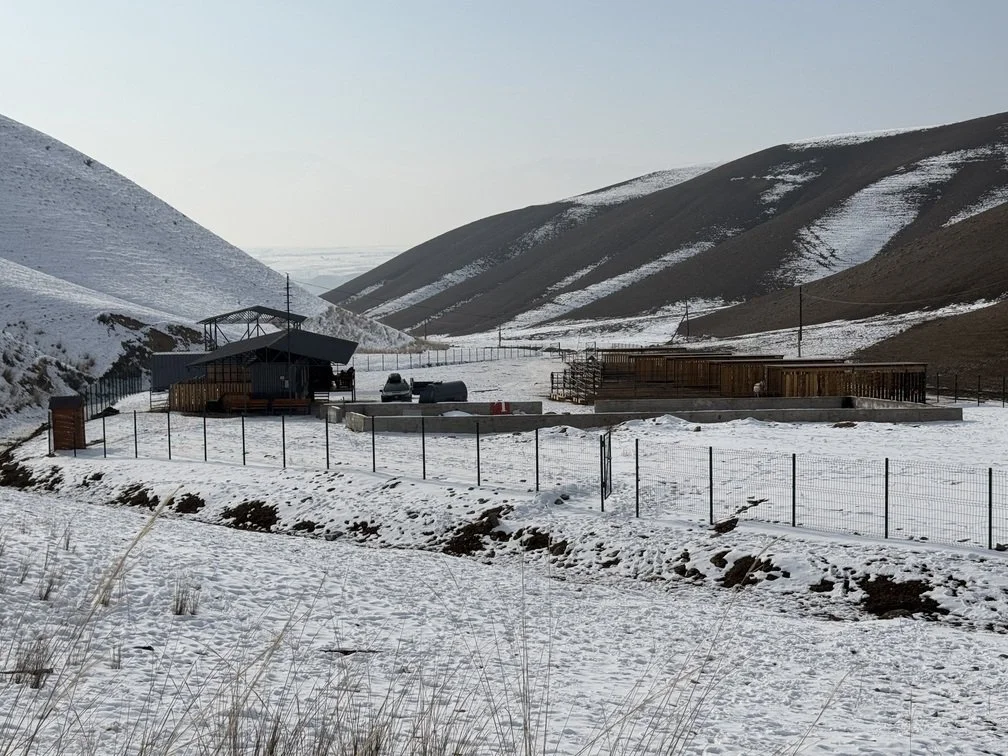
Chaar ranch, February 2026
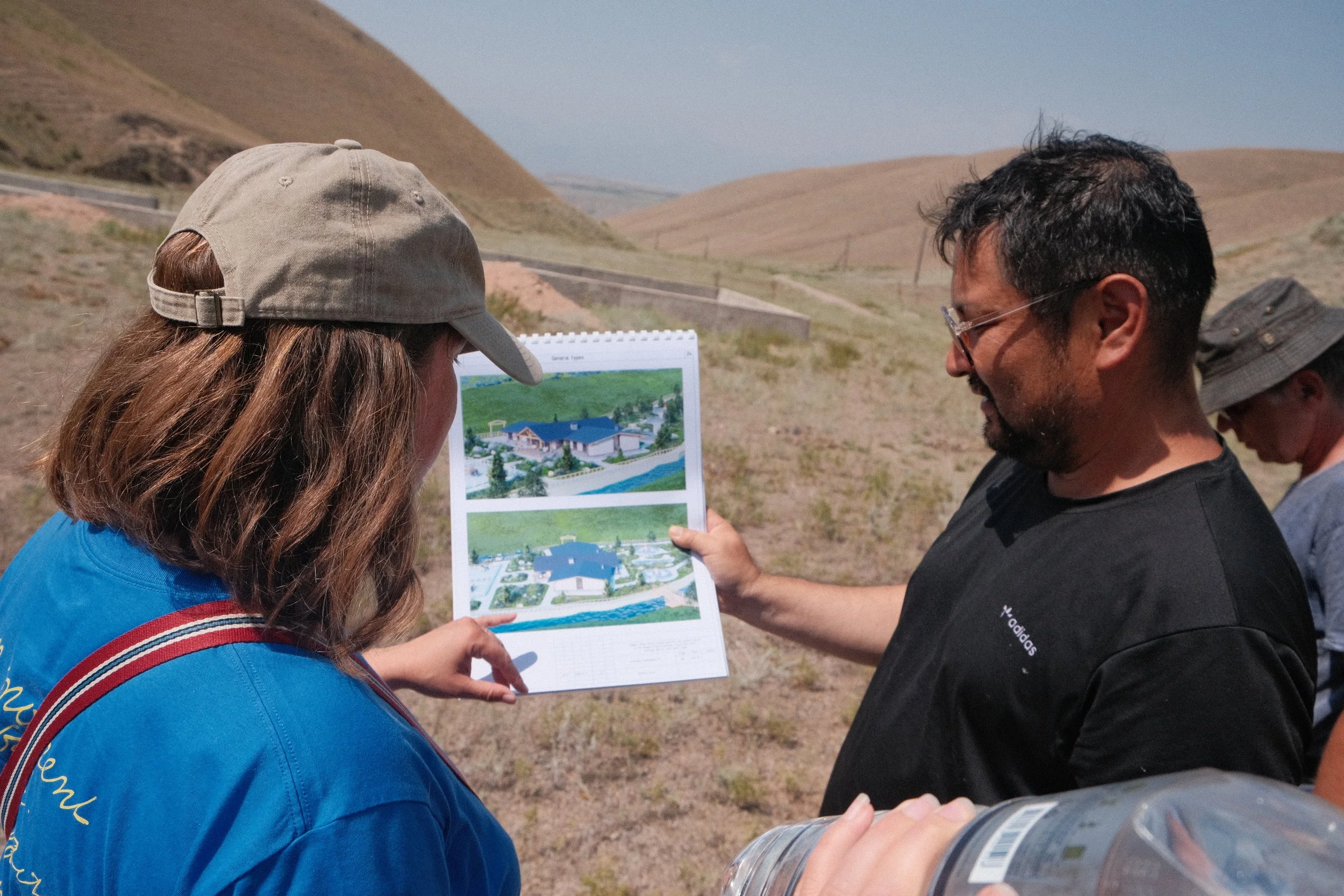
Munarbek showing Alice and the first Chaar Expedition team the plan of the future Chaar art residency on the new land, before phase 1 ranch construction work started
And there's one more thing ahead that will shape everything that comes next: the Chaar Art Residency, a 400 square metre space we're building from clay, sand, straw, and wood, right here in these mountains. It's meant to be a place where artists, photographers, writers, and researchers from around the world can come and stay, and where a new story about the Chaar horse can take shape through art, image, music, and the kind of storytelling that reaches people who've never set foot in Kyrgyzstan.
Chaar Ranch isn't the whole story. It's one living part of something much bigger. The road ahead won't be easy, but it's a road the Chaar horse itself opened for us, and it's already been the most extraordinary, most moving journey we could have imagined. Whatever questions and mysteries these mountains are still holding onto, we intend to keep searching for the answers, together with you.
With all the best, Munarbek