Kyrgyz women in nomadic life
Nomadic life asked a great deal of Kyrgyz women. A family’s wellbeing depended on its livestock, and on how well milk, meat, wool and hides were processed and stored in time, much of it women’s work.
In families without much wealth, husband and wife worked as partners, and that shared work gave women a real say in running the household. Customary law and tradition protected women’s rights, and a woman was honoured as the keeper of the hearth and as a mother.
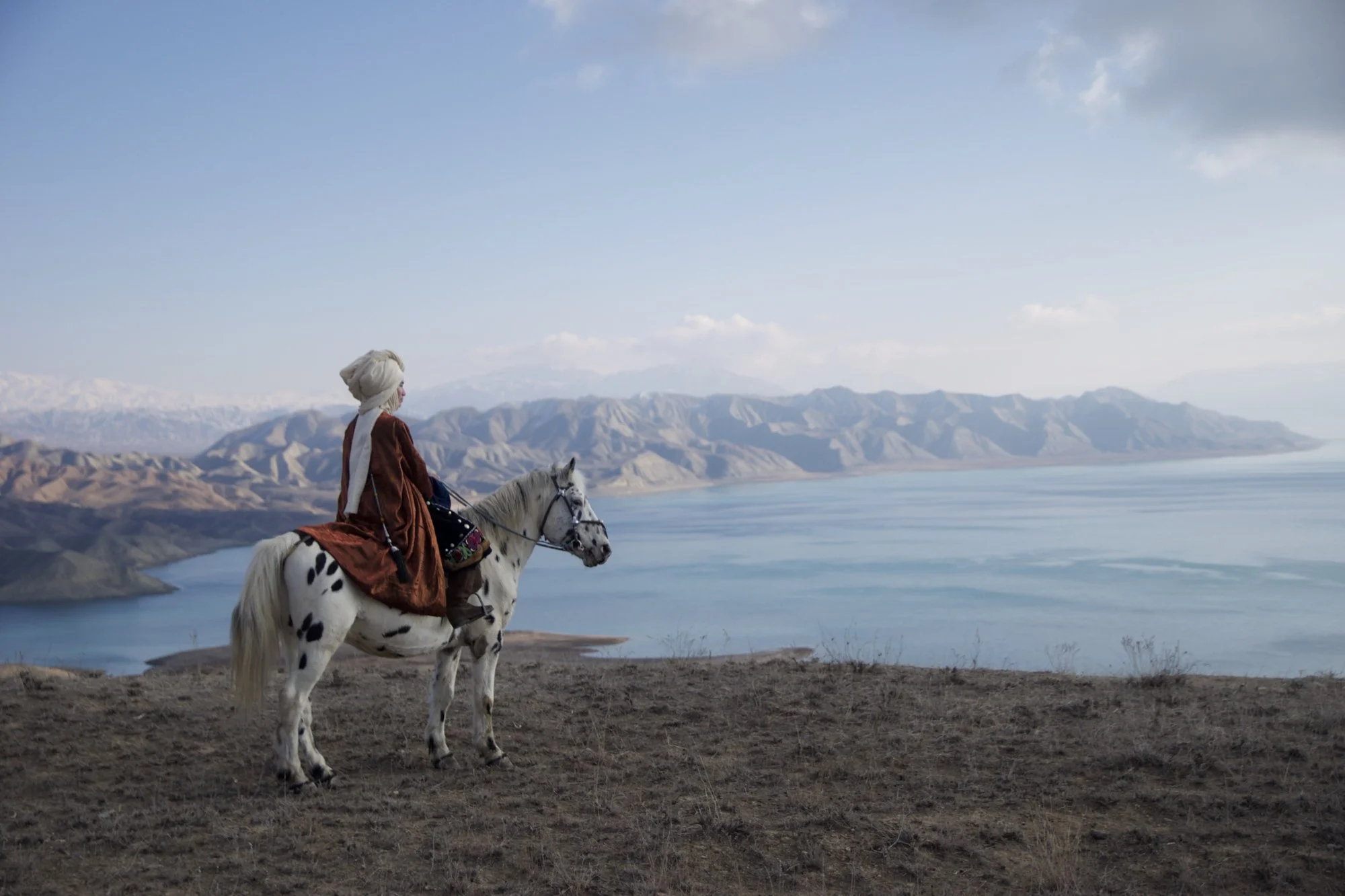
Nomadic life also gave Kyrgyz women more freedom than women in many neighbouring settled societies. They went unveiled, dressed as they chose, moved freely among men, and in some cases had a voice in community decisions.
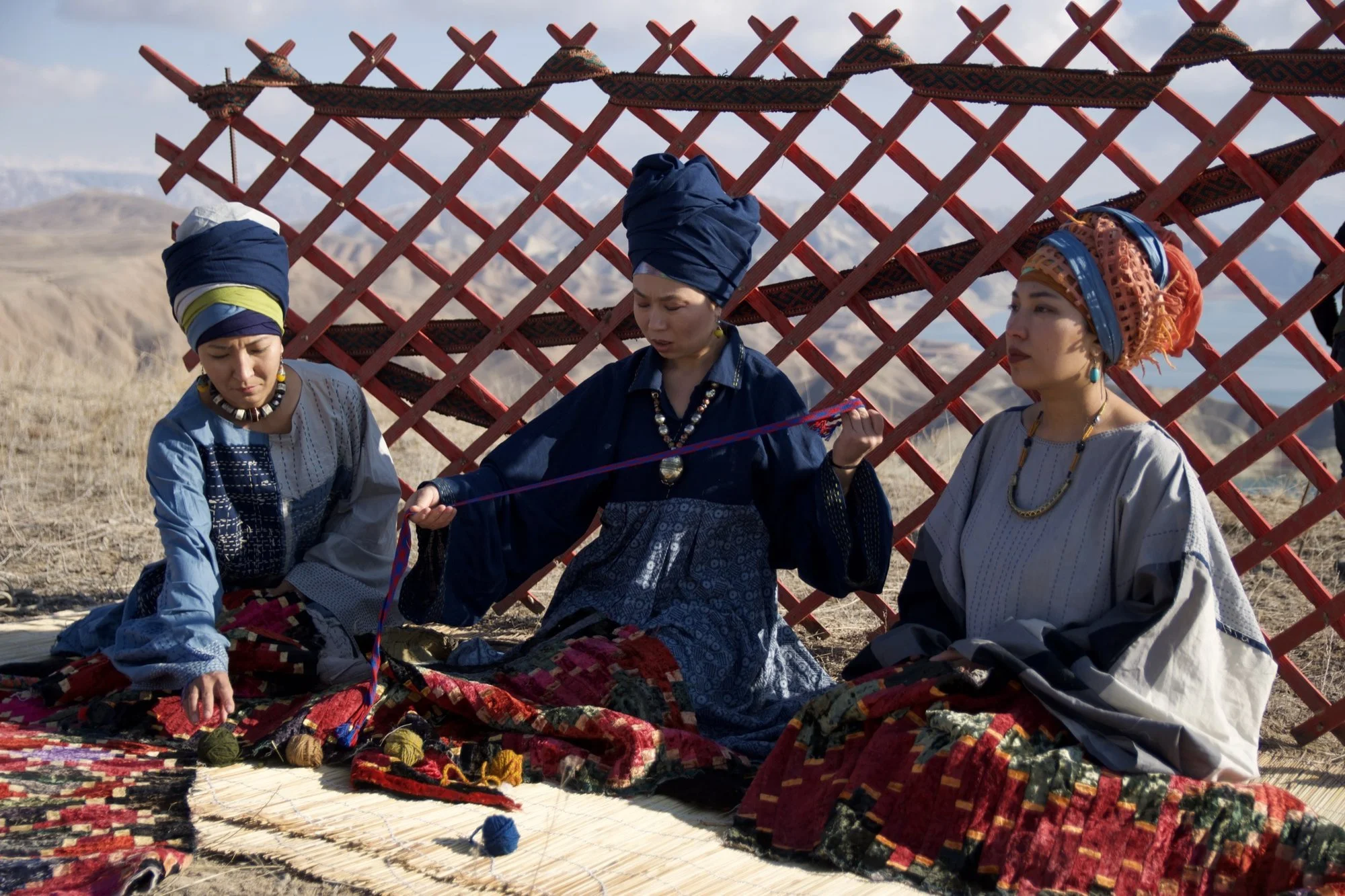
The yurt was a woman’s domain. She made it a home, and much of what filled it, the felt, the shyrdak carpets, the embroidery, was her handiwork. Travellers and researchers who visited the nomads often noted that women carried more of the daily work than men.
Life on the steppe had its hard years. Through them, the strength, wisdom and creativity of Kyrgyz women helped carry families from one generation to the next, and still does.
About the photographs
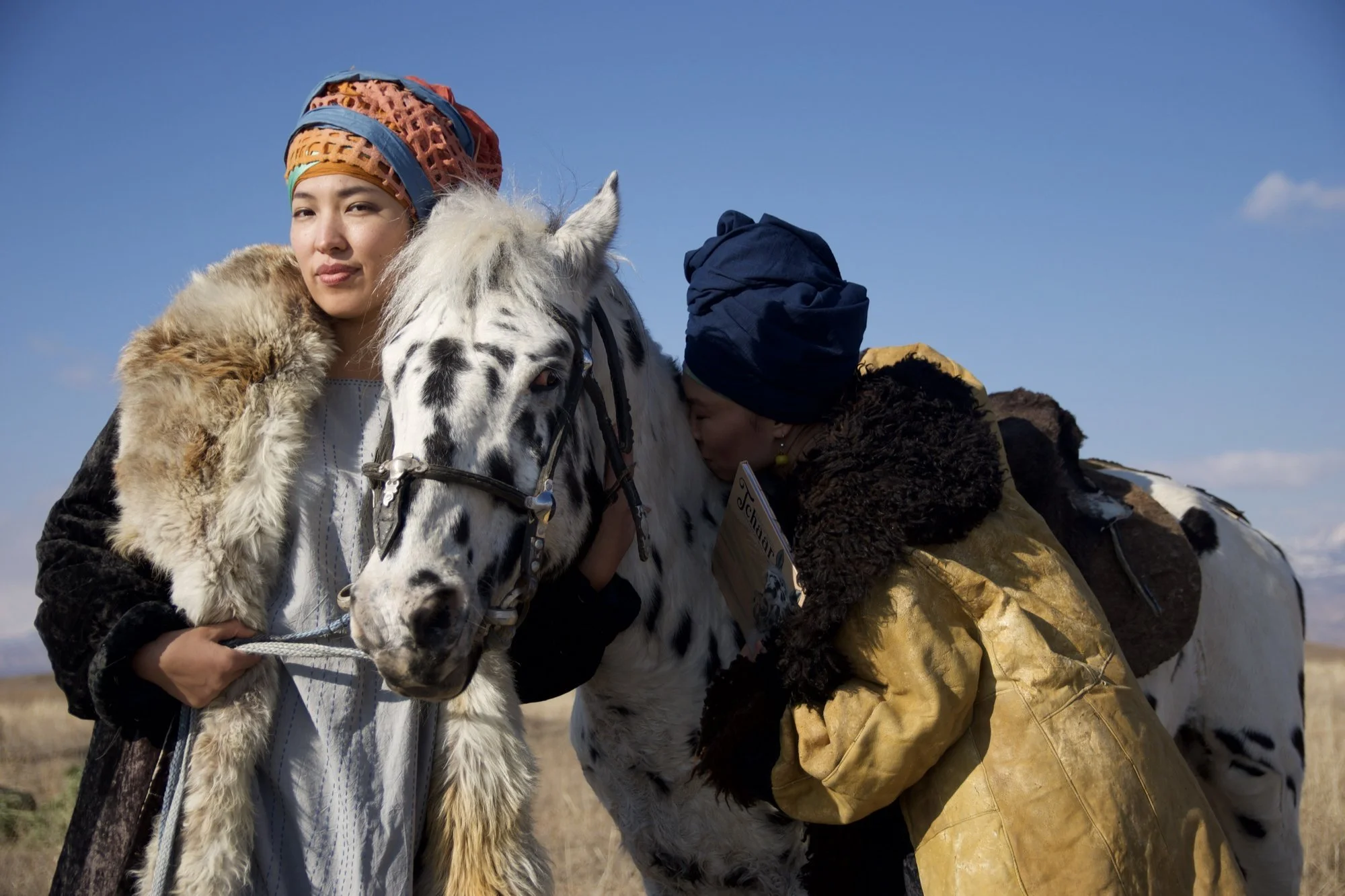
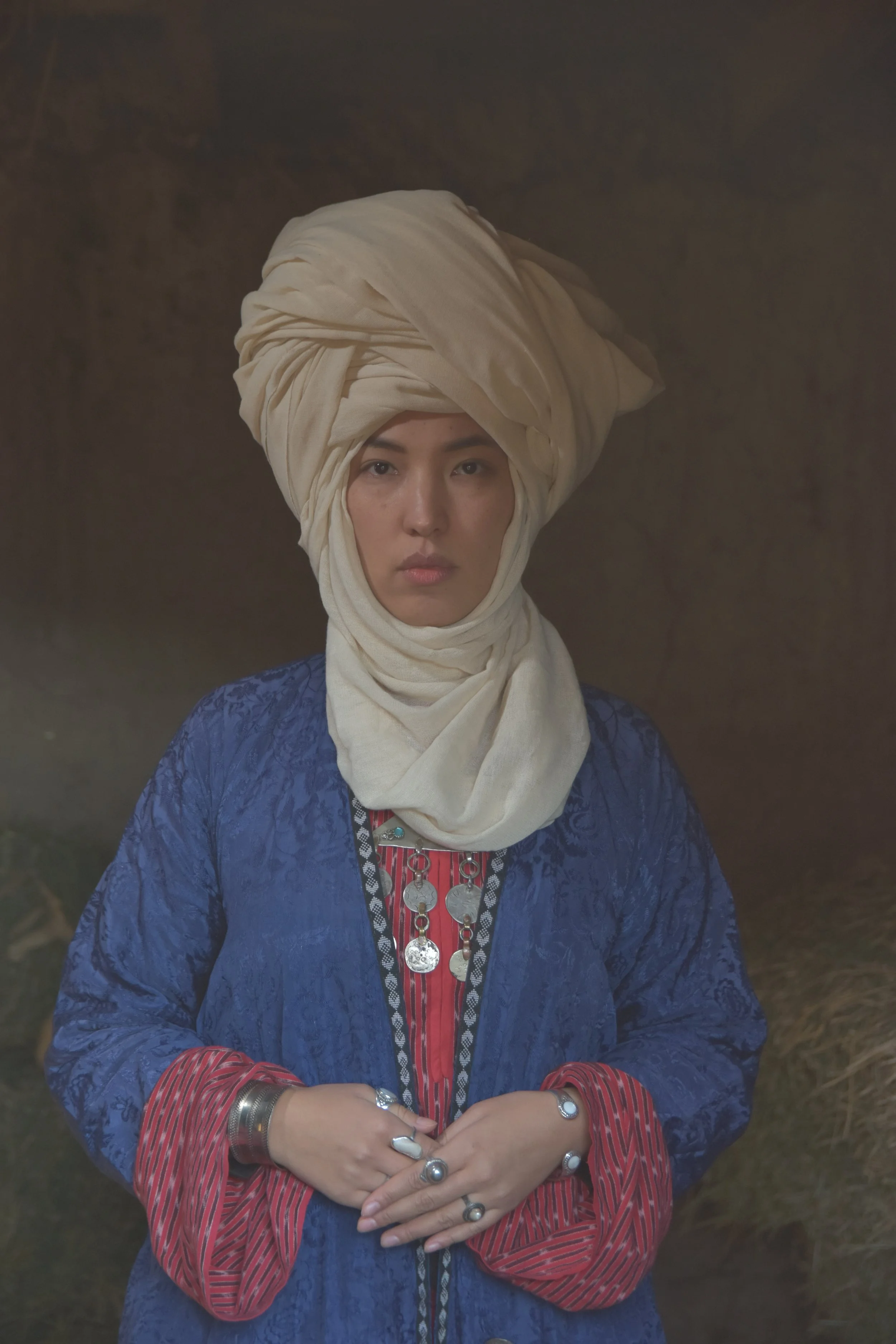
The photographs on this page come from a film and photo shoot by Studio 7-Nebo, made with the Zenius creative economy fund. It puts Kyrgyz women in traditional dress beside the Chaar horses, in the hills and above Toktogul lake, with the stallion Chaar Suluu.
The film was directed and written by Yntymak Abdyldaev and Mirrakhim Oposh, with camera and editing by Daniyar Abirov, costumes by Gulmira Kutueva and music by Balasagyn Musaev. It was produced by Bermet Tursalieva and Munarbek Kuldanbaev, who had the idea together.
Watch the film on our homepage
Photographs: Studio 7-Nebo (camera Daniyar Abirov), above Toktogul lake, November 2020.