Munarbek Kuldanbaev: reviving a rare breed through nature, culture and responsibility
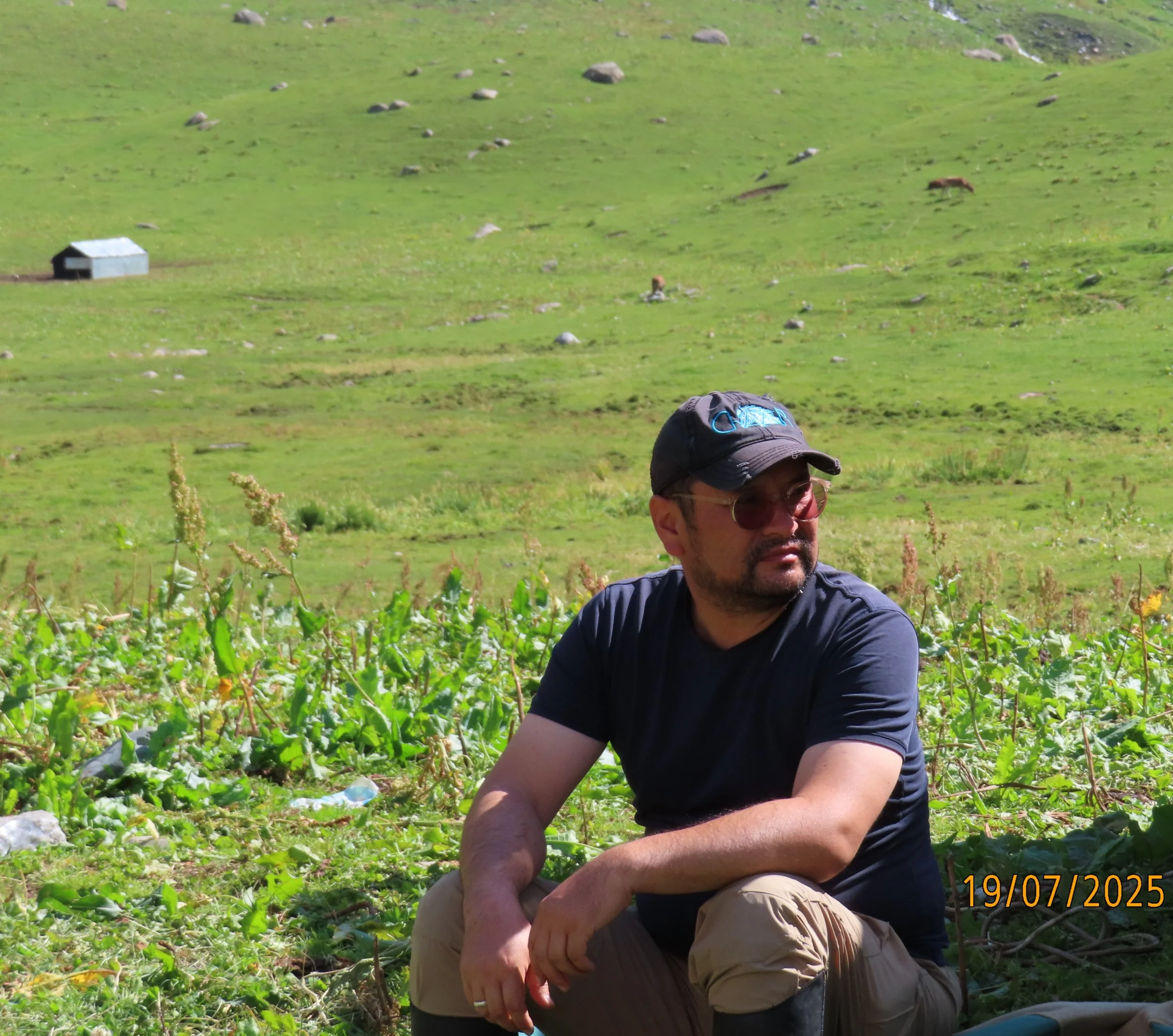
The Chaar came into my life as a quiet, persistent sense of loss more than as any kind of project or idea. I had this feeling that something deeply important was still out there, nearly invisible to most people, and that if nobody took responsibility soon, it would disappear for good.
People often ask me why I do this. The honest answer is simple: everything tied to Chaar, the conservation, the culture, the biodiversity, the work with living animals, means something real to me. Despite every challenge, I genuinely love this path, and I don't think I could keep walking it without that.
The Chaar horse
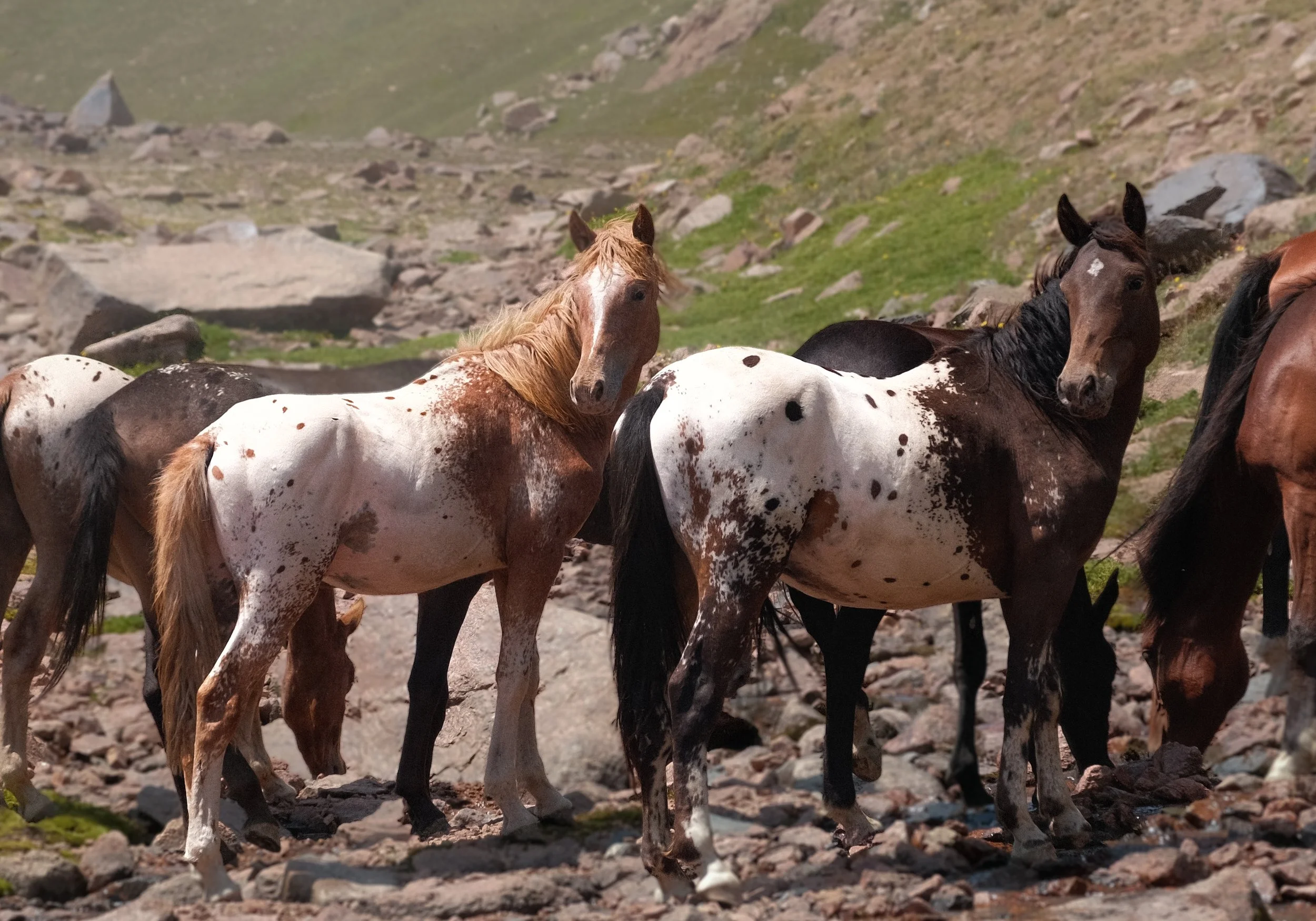
The Chaar horse isn't a breed in the modern, standardized sense. It's the product of centuries of humans, animals, and nature living side by side in conditions that left no room for error. These horses grew up in the mountains and steppes of Central Asia, alongside Kyrgyz nomadic culture, never bred for shows or formal standards. Cold winters, drought, altitude, and long distances did the selecting instead. Only the truly resilient made it through.
The Chaar horse's spotted coat was never just decoration. In traditional culture, it stood for strength and carried real meaning. That understanding faded over time, and as nomadic life itself faded, the Chaar horse started disappearing right along with it. There were no studbooks, no official recognition, no real protection, and uncontrolled crossbreeding slowly wore away everything that made the breed unique.
At a certain point it became clear that Chaar wasn't just struggling. It was standing on the edge of extinction. That rarity came from several things stacking on top of each other: a break in traditional breeding knowledge, no institutional recognition, an extremely small population, and the pressure of modern agriculture and a changing climate. But the most dangerous factor of all was silence, a disappearance with no one watching.
The founding stallion
That's where the practical work began, carefully, on a very small scale. Everything started with just four mares and one stallion, ChaarSuluu. From that moment he was the foundation of the entire revival, not just a breeding horse. Everything that defines Chaar, the endurance, the calm intelligence, the ability to live in balance with nature, was concentrated in his genetics and temperament. ChaarSuluu became the founding stallion of the Chaar revival, carrying forward something that could so easily have been lost for good.
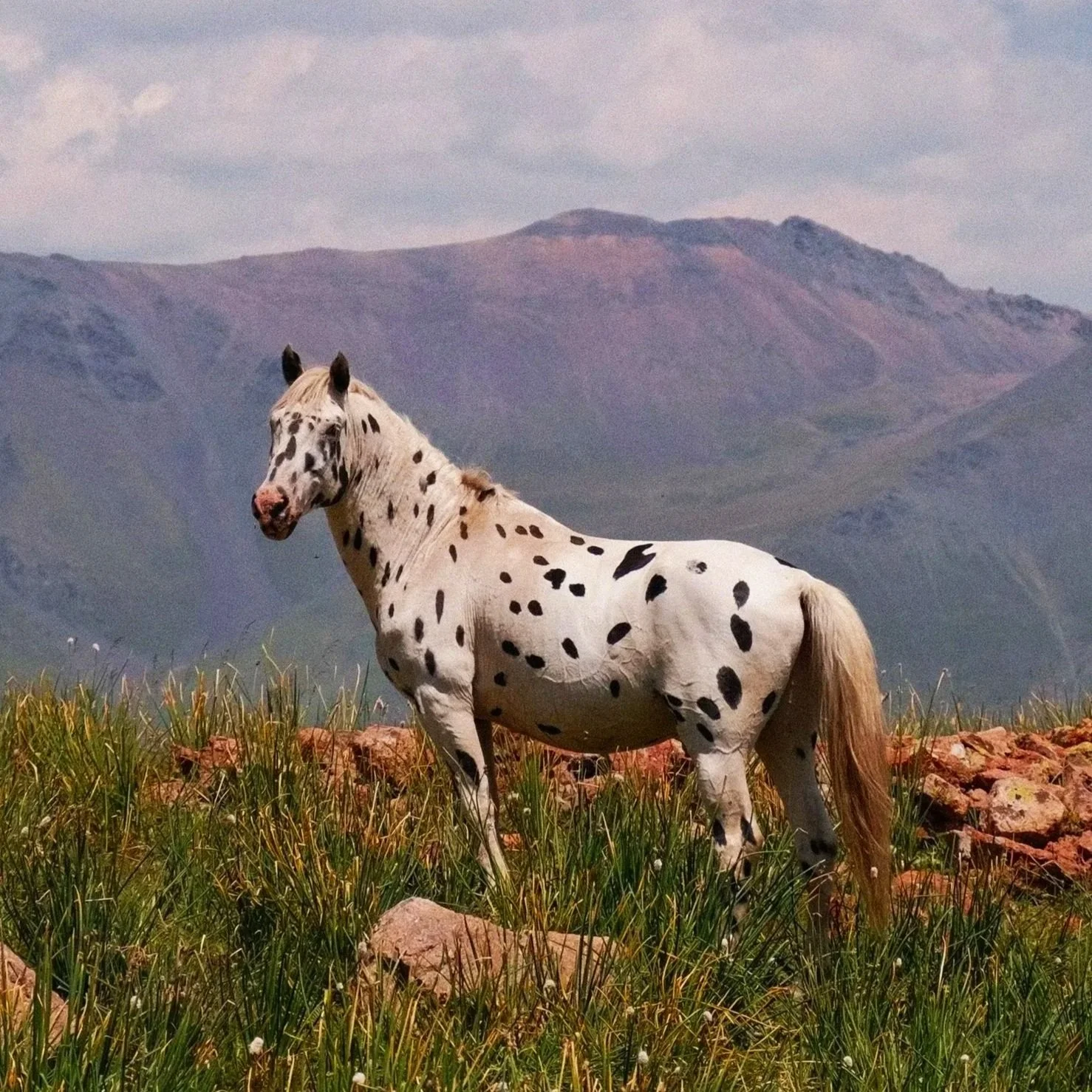
ChaarSuluu
Working with him demanded real care and responsibility. There were no reserve bloodlines, no alternative options waiting in the wings. Every foal born from ChaarSuluu meant more than one more number in the herd. Each one was a step away from extinction, and proof that we were on the right path.
It became clear that Chaar couldn't be preserved halfway or as an afterthought. What it needed was a whole living environment where conservation and visibility could grow together, and an acceptance that this path would never be an easy one.
Working with Chaar horses means facing challenges every single day. Some are obvious: climate, health, reproduction, environmental conditions. Others are quieter: behavior, trust, the fine line between stepping in and holding back. We're constantly learning, searching for solutions, making mistakes, and coming back to observation again. Most of the time, there's no ready-made answer waiting for us.
Every day with Chaar is an attempt to reconnect with nature, in places where most modern people have lost the habit of really listening to it. These horses carry deep, practical knowledge about survival, balance, and resilience, and every day, we keep learning from them.
From survival to growth
Over time, the work started to bear fruit. Today the herd numbers more than 70 Chaar horses, with four breeding stallions supporting reproduction, and ChaarSuluu still standing as the symbolic and genetic origin of the whole revival.
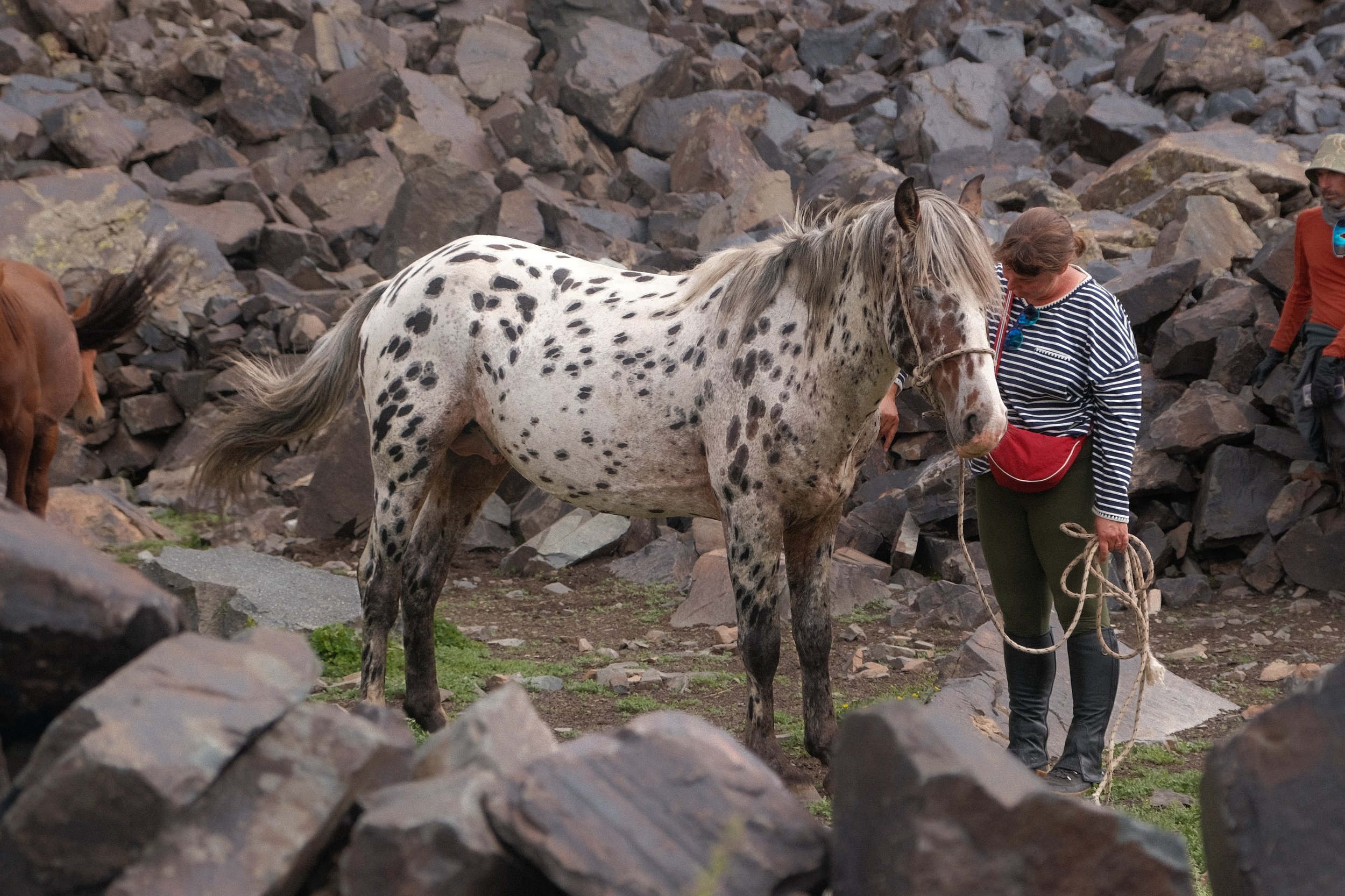
TanSuluu Ottaway and Alice
A new phase is starting now. This year, a young herd is joining the breeding process alongside a young stallion, TanSuluu, and he marks a real shift from survival toward growth. ChaarSuluu gave us preservation and stability. TanSuluu brings forward movement, genetic expansion, and the breed's future. Between them, the two stallions form a kind of dialogue across generations, one that lets Chaar's revival keep going as a long, living process rather than a single fixed achievement.
The Chaar Appaloosa Association
The Chaar project was never going to stay local. Genetics, culture, and biodiversity don't respect borders, and by its nature this work is international. In 2023, in France, with support from friends across different countries who shared these values, we founded the International Chaar Appaloosa Association. It connects what we do in a small corner of Kyrgyzstan with the wider world, with researchers, artists, partners, volunteers, and everyone who cares about living heritage. The association is non-profit, non-political, and non-religious, which keeps it transparent and built to last.
Chaaramel and AlmaChaar future promising stallions
Chaar Ranch and art residence
At the same time, the practical foundation of the project was taking shape. Chaar Ranch became a real, functioning place, already built and in daily use, not just an idea on paper. It's the ecological and physical core of the whole project, a space where the horses live as close to their natural environment as possible, where we keep our own intervention to a minimum, respect natural rhythms, and practice responsible, long-term breeding. Here, Chaar stays a horse, never an object.
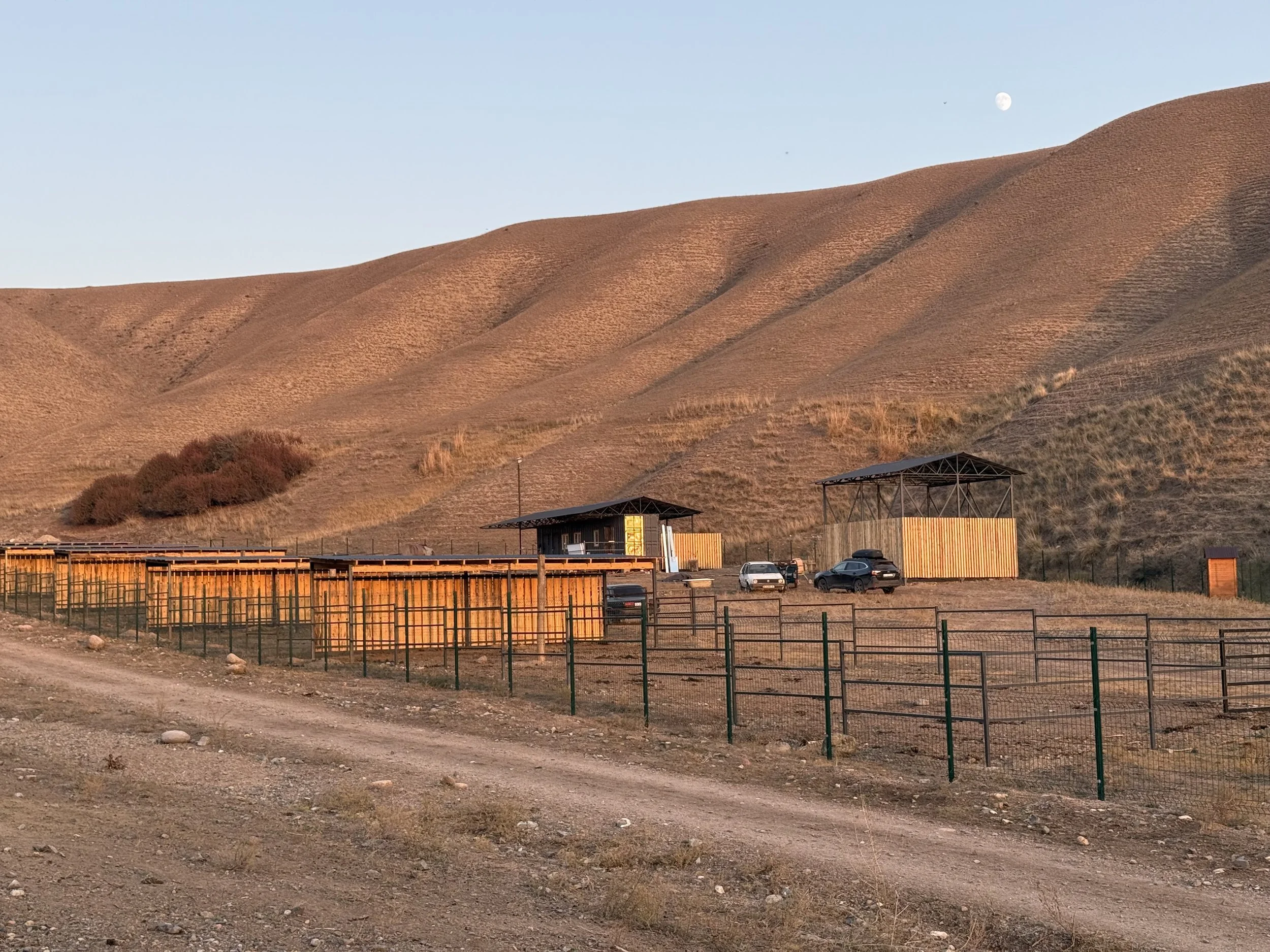
Chaar ranch
Over time, it became clear that the next step had to go beyond practical conservation. Preserving the horses is essential, but on its own it isn't enough. Chaar also needs to be understood and heard in today's world, and that's what led to the vision of the Chaar Art Residence, which is currently in the planning stage.
The residence is conceived as a natural continuation of the ranch, its cultural and intellectual extension rather than something separate. It will welcome artists, architects, photographers, researchers, and thinkers who'll live and work right inside the Chaar environment. Through art, research, and real dialogue, the Chaar horse can find its way back into the global cultural conversation.
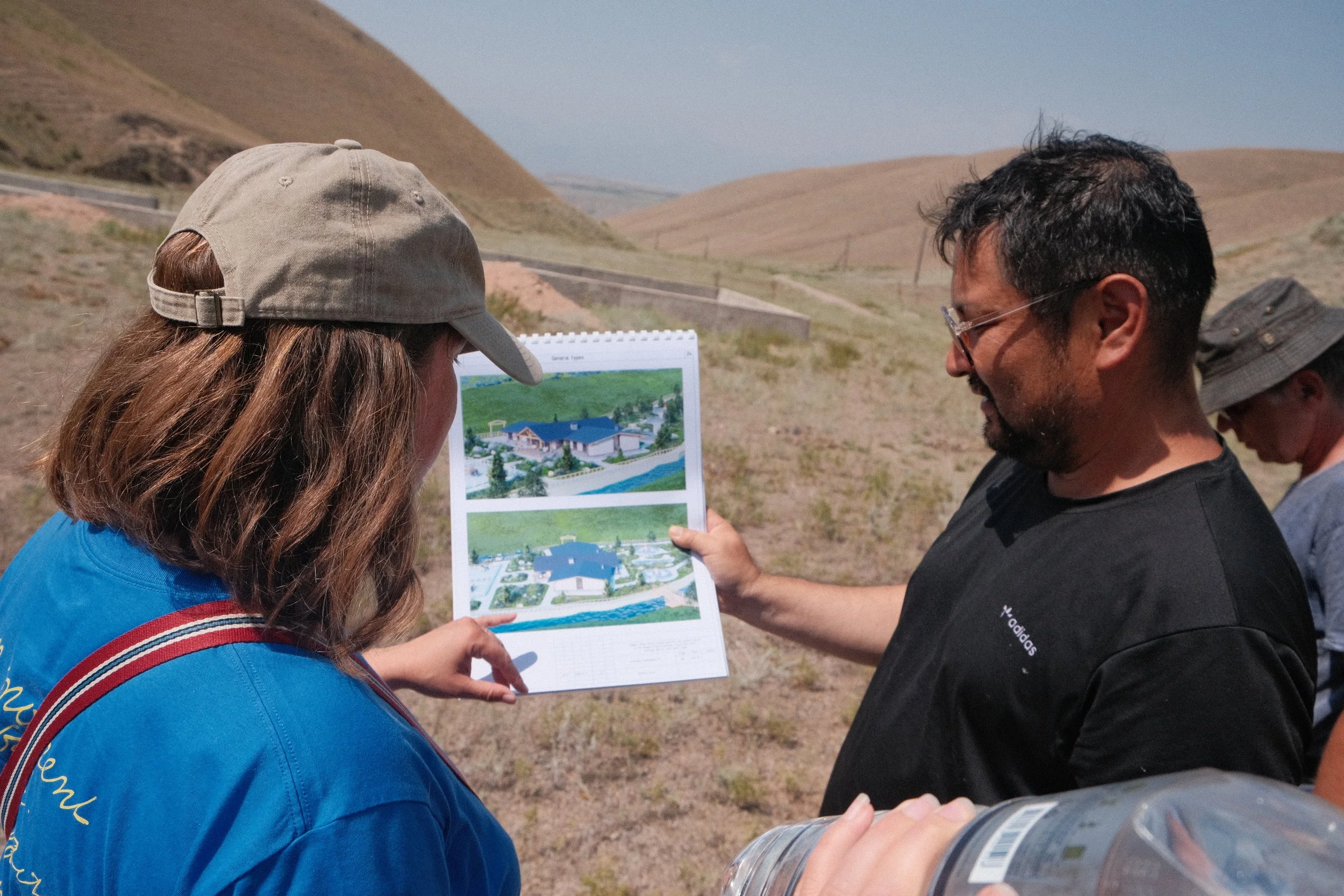
Munarbek showing to Alice plan of the future Chaar art residence
Today, Chaar has become more than just a rare horse. It's a path of continuous learning, and a choice for long-term thinking over quick results: diversity over uniformity, responsibility over loss, genuine engagement over passing interest.
Every Chaar foal born today is a small victory over disappearance, and a reminder that we're still learning: how to see, how to listen, how to reconnect with nature.
The Chaar horse isn't rare because it's exotic. It's rare because it survived an era that had little patience for anything fragile. And if Chaar has a future today, it means we still have a real chance to preserve something truly essential.
sincerely,
Munarbek